India and China have resumed high-level negotiations on their long-running boundary dispute, with the latest round of talks taking place at a time when tensions along the Arunachal Pradesh frontier are creating fresh challenges for efforts to stabilise bilateral relations.
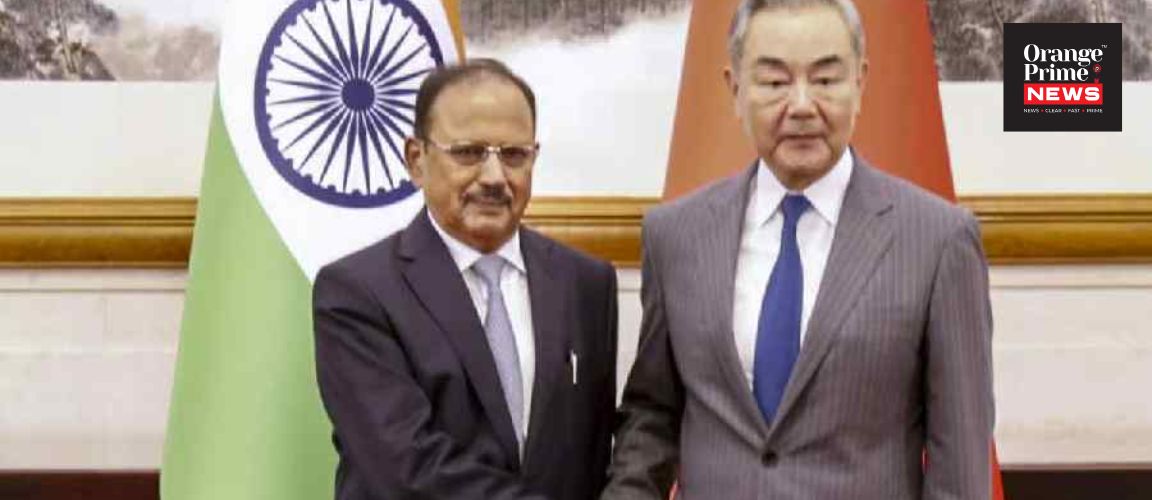
National Security Adviser Ajit Doval and Chinese Foreign Minister Wang Yi met on Tuesday for the 25th round of talks between the two countries' Special Representatives on the boundary question.
The meeting was aimed at discussing the disputed frontier as well as the broader state of India-China relations.
The talks assume particular importance because they coincide with reports of heightened activity by Chinese forces along parts of the Line of Actual Control in Arunachal Pradesh.
Sources cited in the report alleged that the People's Liberation Army had attempted to reinforce its territorial claims by establishing temporary camps or tents inside areas claimed by India.
There have also been concerns over restrictions on Indian Army access to certain patrol points along the frontier.
The latest developments have added complexity to diplomatic efforts to improve relations between the two Asian powers after years of military confrontation and political mistrust.
Doval stresses importance of border peace
Doval, who serves as India's Special Representative for the boundary negotiations, emphasised the importance of maintaining stability along the frontier.
According to the Indian government's account of the meeting, Doval told Wang that peace and tranquillity in the border areas were essential for the continued development of bilateral relations.
The message reflected India's longstanding position that progress in the wider relationship depends significantly on maintaining calm along the disputed boundary.
The two Special Representatives held what the Ministry of External Affairs described as a candid and in-depth exchange of views on the boundary question.
Both sides agreed to continue efforts towards finding a political settlement to the dispute while keeping their broader and long-term interests in consideration.
The official readout did not provide details of specific differences discussed during the meeting.
It also did not refer directly to the latest reports of tensions along the Arunachal Pradesh frontier.
The absence of a public reference to the immediate border concerns suggests that the talks were framed primarily around the longer-term diplomatic process rather than the disclosure of operational details concerning the current situation.
China highlights strategic importance of relationship
Wang, who is also China's Special Representative for the boundary talks, sought to emphasise the wider significance of the India-China relationship.
He said the relationship had developed beyond the purely bilateral sphere and had acquired broader global and strategic importance.
According to Wang, the two countries should increase communication, build mutual trust and work towards removing obstacles affecting their relationship.
He also stressed the need for India and China to handle differences appropriately while strengthening cooperation.
Wang described the two countries as neighbours that should maintain friendly relations and partners capable of contributing to each other's development.
His comments indicated Beijing's interest in keeping the wider relationship on a stable track despite continuing differences over the boundary.
The Chinese foreign minister also said the two sides should use their discussions to improve mutual understanding and address issues of common interest.
He linked the boundary dialogue to the broader objective of giving fresh momentum to bilateral relations.
Talks take place ahead of BRICS summit
The timing of the meeting has added diplomatic significance because Chinese President Xi Jinping is expected to travel to New Delhi for the BRICS summit next month.
Doval referred to the importance of the 25th round of Special Representatives' talks against the backdrop of the forthcoming summit.
A visit by Xi to India would provide an opportunity for the two governments to engage at the highest political level after a prolonged period of strained relations.
The border issue is likely to remain an important element of any such engagement.
For New Delhi, maintaining peace along the frontier is regarded as essential to preventing border disputes from repeatedly disrupting the wider relationship.
For Beijing, improved ties with India could have implications for regional diplomacy, economic engagement and cooperation in international groupings such as BRICS.
The Special Representatives' meeting therefore comes at a potentially important stage in preparations for broader diplomatic engagement.
Arunachal Pradesh remains a sensitive frontier
Despite the constructive language used by both sides during the talks, the situation along the Arunachal Pradesh frontier remains a major source of concern for India.
The two countries have competing territorial claims in the region, with China continuing to assert claims over large areas of Arunachal Pradesh.
India has consistently rejected those claims and maintains that Arunachal Pradesh is an integral part of the country.
The latest concerns centre on alleged Chinese attempts to establish a physical presence in areas on the Indian side of the Line of Actual Control.
According to sources cited in the report, Chinese troops have allegedly used tents to reinforce claims in disputed areas.
Indian security authorities have also faced concerns regarding access to patrol locations.
Such developments are particularly sensitive because even relatively small changes in the ground situation can have wider diplomatic and military consequences along the disputed frontier.
The two sides have previously experienced prolonged military confrontations in other sectors, making the prevention of new escalation a key priority.
Legacy of the 2020 Galwan clash
India-China relations deteriorated sharply following the deadly Galwan Valley clash in June 2020.
The confrontation in eastern Ladakh resulted in casualties on both sides and triggered a prolonged military stand-off.
The crisis led to the deployment of large numbers of troops and military equipment along the frontier.
It also significantly affected political and economic relations between New Delhi and Beijing.
Since then, the two governments have held multiple rounds of military and diplomatic negotiations aimed at reducing tensions and resolving outstanding issues at different friction points.
Some progress has been made towards disengagement in selected areas, but the broader boundary dispute remains unresolved.
The latest Special Representatives' meeting is therefore part of a much longer diplomatic process rather than a standalone attempt to settle the territorial dispute.
Political settlement remains long-term objective
The official statement following Tuesday's meeting said Doval and Wang would continue working towards a political settlement of the boundary question.
Such a settlement would require agreement on a dispute that stretches across a difficult and geographically complex frontier.
India and China have held Special Representatives' talks for years in an effort to find a framework acceptable to both sides.
However, differences over territorial claims and perceptions of security have repeatedly slowed progress.
The latest commitment to continue negotiations nevertheless provides a channel for diplomatic engagement at a time when tensions could otherwise complicate the relationship further.
For India, the immediate objective remains maintaining peace and ensuring that established arrangements along the Line of Actual Control are respected.
For China, continued dialogue provides a mechanism for managing the boundary dispute while preventing it from overwhelming other areas of bilateral engagement.
Wider relationship also under discussion
The boundary dispute is only one component of the broader India-China relationship.
Trade, investment, regional security and cooperation in multilateral organisations have all been affected by the deterioration in ties since 2020.
Both governments have periodically signalled an interest in stabilising relations, even while maintaining firm positions on territorial and security issues.
Wang's comments about removing disturbances and strengthening mutual trust reflected that wider effort.
For New Delhi, however, greater engagement with Beijing is closely linked to developments along the frontier.
Indian officials have repeatedly stressed the importance of peace and tranquillity as a foundation for restoring normal relations.
The latest talks therefore represent an attempt to keep diplomatic communication active despite continuing differences on the ground.
BRICS summit could provide next opportunity
The expected BRICS summit in New Delhi could provide another important setting for India-China engagement.
If Xi visits India for the meeting, Modi and the Chinese president would have an opportunity to discuss bilateral concerns directly.
The outcome of the Special Representatives' talks could help establish the diplomatic atmosphere ahead of such an interaction.
However, any improvement in political relations will depend significantly on developments along the disputed frontier.
A reduction in tensions could create space for greater engagement in trade and other areas.
Conversely, new incidents or changes to the ground situation could quickly revive mistrust and complicate efforts to rebuild ties.
Border stability remains immediate priority
For now, both sides have publicly emphasised dialogue and the need for stability.
The language used after Tuesday's meeting suggests that neither government wants the boundary dispute to derail the broader relationship.
At the same time, reports of alleged Chinese activity in Arunachal Pradesh demonstrate the continuing difficulties involved in translating diplomatic commitments into stability on the ground.
The challenge for the Special Representatives will be to maintain communication while addressing the underlying disagreements that have persisted for decades.
The talks have not produced a final settlement of the boundary dispute, but both sides have agreed to continue negotiations.
With the BRICS summit approaching and concerns remaining along the Arunachal Pradesh frontier, the coming weeks could be important for India-China relations.
The immediate test will be whether the two countries can maintain peace along the Line of Actual Control while sustaining the diplomatic process.
For New Delhi, any durable improvement in bilateral relations will ultimately depend on stability and respect for existing arrangements along the border. For Beijing, continued dialogue offers a route to prevent territorial differences from becoming a permanent barrier to wider engagement.
Tuesday's meeting has kept that diplomatic channel open, even as unresolved territorial claims continue to test the relationship.