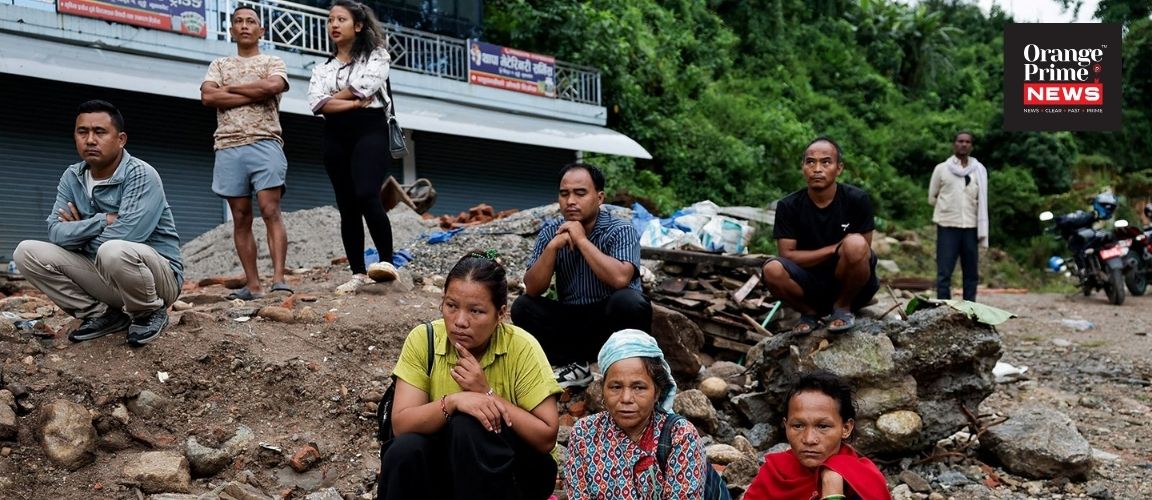
Authorities in Nepal and China have halted or scaled back rescue operations in parts of the flood-hit Himalayan region after a newly formed barrier lake began overflowing, creating fears of another major surge of water.
The latest warning comes only days after severe flash floods caused widespread destruction in Nepal and neighbouring areas of Tibet.
Chinese state broadcaster CCTV reported on Friday that a lake formed upstream of the Gyirong border port had begun to overflow.
The development has raised concerns that water released from the lake could enter downstream river systems and affect areas already struggling to recover from the earlier disaster.
Rescue operations related to the previous flooding have been temporarily suspended as authorities assess the new danger.
The situation has also prompted rescue workers in Nepal to move away from riverbeds and other vulnerable locations.
Officials are closely monitoring water levels as further rainfall is forecast across the region.
Barrier lake raises new flood threat
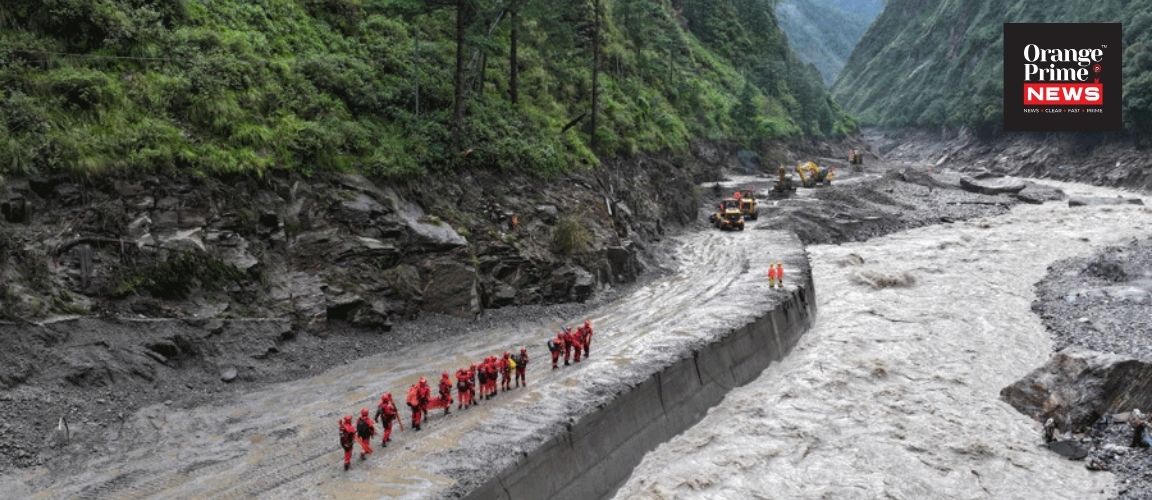
Aerial images captured by Chinese rescue teams on Thursday showed a large accumulation of muddy water behind a natural barrier.
The footage, reported by Chinese state media, showed brown water filling a basin with no obvious outlet.
Vegetation, including bushes and trees, was already partly submerged.
The lake appeared to be contained by a mass of debris and rocks, creating a natural barrier between the accumulated water and the downstream area.
Such barrier lakes can form when landslides, debris or other material block a river or valley.
If the barrier becomes unstable or water overtops it, large volumes of water can be released downstream in a short period.
That possibility has become a major concern for authorities because the region has already experienced extensive flooding and infrastructure damage.
Chinese authorities have therefore warned that the situation requires close monitoring as water continues to accumulate.
Water levels continue to rise
Chinese water authorities have warned that the volume of water in the lake is still increasing.
Zhu Jinfeng, a researcher with the hydrology department of China's Ministry of Water Resources, said the continuing rise in water volume was accompanied by an increasing level of risk.
The warning has added urgency to efforts to keep rescue personnel away from potentially dangerous areas.
Authorities are also assessing whether the barrier can withstand the growing pressure.
The precise scale of the potential downstream impact remains uncertain.
However, the combination of an already saturated landscape, damaged infrastructure and additional rainfall could make any new flooding particularly dangerous.
More rain expected
Weather forecasts are adding to concerns over the situation.
Chinese state media, citing the country's water resources ministry, said rainfall expected over the coming week could increase the threat.
Additional rain could raise water levels in rivers and further increase the volume held behind the natural barrier.
It could also trigger additional landslides in mountainous areas where the ground has already been affected by the earlier floods.
The possibility of renewed rainfall means authorities cannot assume that conditions will stabilise simply because the first floodwaters have receded.
Emergency teams are therefore being advised to remain cautious while monitoring developments.
Nepal rescue teams move to higher ground
The warning has also affected rescue efforts on the Nepalese side of the border.
Some rescuers began moving towards higher ground after receiving information about the potential danger.
Pawan Koirala, who was working with a 13-member rescue team, said his group moved away from the riverbed after the warning was issued.
The decision reflects concerns that a sudden increase in river levels could put rescue personnel themselves at risk.
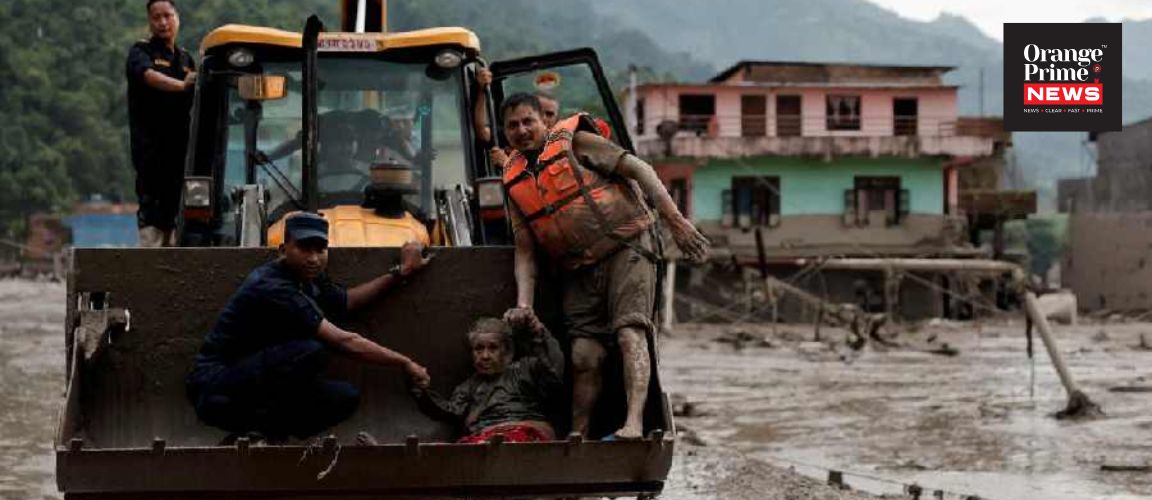
Rescue teams have been working in difficult conditions since the initial flash floods, searching for missing people and assisting survivors.
The possibility of another surge has now complicated those operations.
Rasuwa authorities report rising river levels
Officials in Nepal's Rasuwa district have also received a warning that a lake had broken its banks.
Narendra Pariyar, the district's senior bureaucrat, said authorities could see that the level of water in the river was increasing.
He said it was not immediately clear how high the water had risen.
The report has heightened concern in Rasuwa, one of the areas affected by the earlier disaster.
Officials are monitoring the river and surrounding areas while assessing the potential consequences of the latest development.
The uncertainty over the exact water level is making it difficult to determine how quickly downstream areas could be affected.
Earlier flash floods caused widespread devastation
The latest threat comes after severe flash floods struck Nepal earlier in the week.
The disaster caused deaths, injuries and extensive damage to homes, roads, bridges and other infrastructure.
Several areas near the Nepal-China border were particularly badly affected.
The flooding also disrupted transportation and communication links, complicating efforts to reach people who were stranded or missing.
Emergency agencies and local authorities have been working to search affected areas and provide assistance.
The formation of a new barrier lake has now created an additional challenge for those operations.
Gyirong border area remains vulnerable
The Gyirong region is an important crossing point between China and Nepal and has been affected by damage to roads and infrastructure.
The area connects Tibet with Nepal through mountainous terrain, where landslides and flooding can quickly disrupt transportation.
Images from the region showed damaged roads and large quantities of mud and debris following the earlier disaster.
The new water threat could further complicate efforts to restore transport links.
Any additional flooding could also affect access routes used by emergency workers and residents.
Authorities are therefore keeping the situation under close observation.
Rescue operations face fresh challenges
The suspension of rescue operations reflects the difficult balance emergency teams must maintain between helping people and protecting rescuers.
Search teams need access to affected areas, but rising water and unstable terrain can quickly turn previously accessible locations into dangerous zones.
The latest barrier-lake warning means some teams may have to wait until authorities are confident that the immediate risk has reduced.
This could delay searches for people who remain missing following the earlier floods.
At the same time, moving rescuers to higher ground can ensure that emergency personnel remain available if a new flood surge occurs.
Risk extends beyond the immediate lake
The threat posed by the barrier lake is not limited to the area where the water has accumulated.
A sudden release could send a large volume of water downstream through river channels.
The impact would depend on the stability of the natural barrier, the volume of water behind it and the amount of additional rainfall received in the area.
Mountainous terrain can also accelerate the movement of floodwater, leaving communities with little time to respond.
For that reason, authorities in both Nepal and China are treating the development as a serious and evolving risk.
Rainfall could worsen landslide danger
Further rain could create additional problems beyond flooding.
Mountain slopes destabilised by the earlier disaster could become more vulnerable to landslides.
Such landslides could block roads, damage remaining infrastructure and potentially create additional temporary water barriers.
This could make the emergency situation more difficult to manage, particularly in remote parts of the Himalayan region.
Emergency authorities therefore face the challenge of monitoring several interconnected risks at the same time.
Authorities maintain close watch
Chinese and Nepalese officials are monitoring water levels and assessing conditions around the affected rivers and the barrier lake.
The priority is to prevent further loss of life while ensuring that rescue teams can resume operations when conditions become safer.
Authorities are also expected to keep communities in potentially affected downstream areas informed about changes in water levels.
The continuing rainfall forecast means the situation could change rapidly.
Officials have consequently urged caution rather than assuming that the immediate danger from the earlier floods has passed.
Humanitarian response remains complicated
The new threat comes at a time when emergency agencies are already dealing with the consequences of the earlier disaster.
Many communities have suffered damage to homes and infrastructure, while roads and communication networks remain disrupted.
The emergency response is therefore taking place under unusually difficult conditions.
For rescuers, the priority remains finding missing people and helping survivors while avoiding unnecessary exposure to the new flood threat.
For residents, the prospect of another surge adds to the uncertainty following the devastation caused earlier in the week.
Fresh flood threat keeps region on alert
The overflowing barrier lake has introduced a new and potentially serious phase to the Nepal flood emergency.
China and Nepal are now dealing with the possibility that rising water and further rainfall could trigger additional flooding in already affected areas.
The temporary suspension of rescue operations demonstrates the seriousness of the threat.
With water levels continuing to rise and more rain expected, authorities are keeping rescue personnel away from the most vulnerable areas while monitoring the lake and river systems.
The immediate priority is to prevent further casualties and protect emergency teams.
Whether rescue operations can resume will depend on how the barrier lake develops and whether rainfall intensifies in the coming days.
For communities already devastated by the earlier floods, the latest warning has brought renewed fears of another dangerous round of flooding.