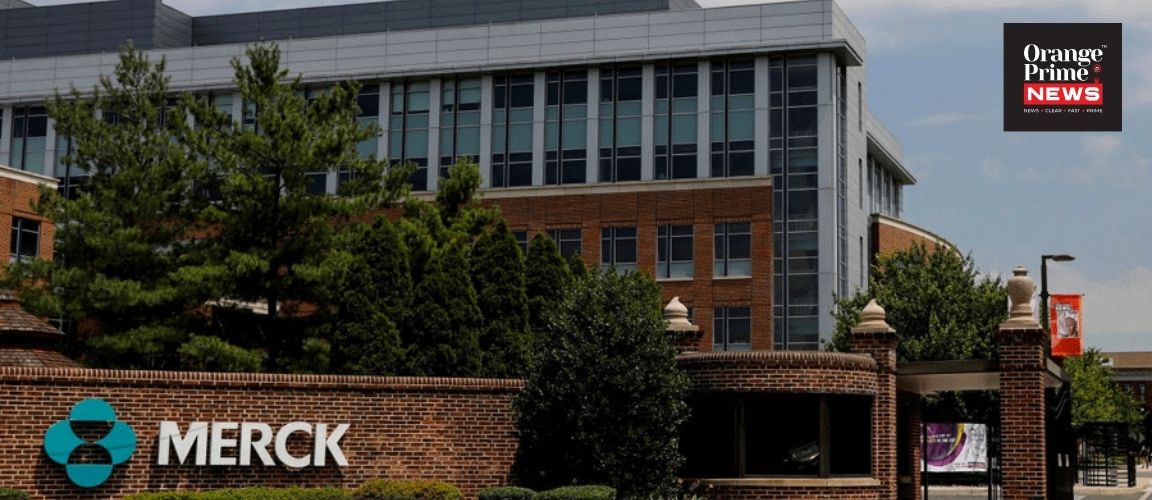
A decade-long collaboration between Moderna and Merck has produced what the companies describe as an important breakthrough in the development of therapeutic cancer vaccines, after an mRNA-based treatment showed encouraging results in a late-stage melanoma trial.
The vaccine, intismeran autogene, is designed to create a personalised immune response against mutations found in an individual patient's tumour.
The companies are developing the treatment in combination with Merck's Keytruda, an established immunotherapy that helps the body's immune system recognise and attack cancer cells.
In a trial involving more than 1,000 patients with localised melanoma, the combination reduced the risk of tumours returning or spreading, according to the companies.
Full details of the trial have yet to be presented publicly, but the results have already attracted significant attention from cancer researchers and investors.
The development is being viewed as a potential turning point for therapeutic cancer vaccines, an area of research that has faced repeated setbacks over more than a century.
Unlike conventional vaccines designed to prevent infectious diseases, therapeutic cancer vaccines are intended to help the immune system recognise and destroy cancer cells that are already present or that may return after treatment.
The Moderna-Merck approach attempts to personalise that immune response by identifying genetic changes unique to a patient's tumour.
A breakthrough after decades of setbacks
Cancer vaccines have been investigated for generations, but researchers have struggled to develop treatments that can consistently produce meaningful clinical benefits.
One major difficulty has been the extraordinary biological diversity of cancer.
Tumours can contain many different mutations, and those mutations can vary from one patient to another. Even within the same tumour, cancer cells may not all carry identical characteristics.
Earlier approaches often attempted to design vaccines around one or two tumour targets.
Researchers found that this strategy could leave cancer cells without those particular targets untouched, allowing the disease to survive or return.
The Moderna-Merck programme took a different approach.
The vaccine is designed to target multiple mutations found in an individual patient's cancer, potentially giving the immune system several different targets to recognise.
Robert Langer, a Moderna co-founder and scientist at the Massachusetts Institute of Technology, said the larger number of potential targets increased the opportunity for the immune system to identify cancer cells.
The strategy became possible because advances in genetic sequencing made it increasingly practical to examine the molecular characteristics of individual tumours.
At the same time, developments in mRNA technology provided a way of rapidly producing a vaccine tailored to those findings.
How the personalised vaccine works
Messenger RNA, or mRNA, carries genetic instructions used by cells to produce proteins.
In the cancer vaccine approach, researchers use mRNA to provide the immune system with information about selected mutations associated with a patient's tumour.
The objective is to train immune cells to recognise those tumour-specific characteristics.
Once the immune system has been primed, it can potentially identify cancer cells carrying the targeted mutations and attack them.
The treatment is therefore different from a conventional cancer drug that is administered in the same form to every patient.
Instead, each patient's tumour is analysed before the vaccine is produced.
The process requires identifying relevant mutations, selecting targets and manufacturing an individualised vaccine.
That makes the approach considerably more complex than producing a conventional vaccine or medicine.
However, the companies believe the technology can make the process sufficiently practical for clinical use.
The melanoma trial was considered particularly suitable for testing the approach because melanoma can contain a relatively large number of mutations.
That provides researchers with more potential targets for a personalised immune response.
Melanoma has also been one of the cancers in which immune checkpoint inhibitors have demonstrated significant effectiveness.
Why Keytruda is important
The cancer vaccine is being tested alongside Keytruda, Merck's widely used immunotherapy.
Keytruda belongs to a class of medicines known as immune checkpoint inhibitors.
These drugs work by removing certain biological signals that prevent immune cells from attacking cancer.
Cancer cells can exploit these mechanisms to avoid detection or suppress immune activity.
Checkpoint inhibitors help release those restrictions, allowing T-cells to become more active against abnormal cells.
Merck executives believe combining this immune activation with a personalised vaccine could produce a stronger response.
The vaccine effectively provides the immune system with a list of tumour-specific targets, while Keytruda helps create conditions in which immune cells can respond to those targets.
The companies have described the combination as complementary: one component helps identify the cancer, while the other helps the immune system maintain its attack.
Why melanoma was chosen
The companies selected melanoma for the late-stage study partly because of the genetic complexity of the disease.
Melanoma tumours often contain numerous mutations, increasing the number of potential targets that can be incorporated into an individualised vaccine.
The timing of treatment was also important.
The trial focused on patients with earlier-stage melanoma whose tumours had already been surgically removed.
That gave researchers time to analyse the removed tumour, identify mutations and manufacture a personalised vaccine before administering it.
It also allowed the immune system to be trained during a period when there was less visible cancer remaining in the body.
The objective was to prevent the disease from returning or spreading after surgery.
The results therefore provide an early indication of whether a personalised immune approach could help reduce recurrence in patients at risk of melanoma returning.
Ten years of development
The latest results are the product of a partnership that began in 2016.
Moderna and Merck announced their collaboration after Moderna had spent years developing its mRNA technology.
Merck brought extensive experience in cancer immunotherapy, particularly through the development of Keytruda.
Under their agreement, Merck paid $200 million upfront in 2016 and another $250 million in 2022. The companies share the costs and profits associated with the programme.
At the time of the partnership, Keytruda was becoming one of the most important drugs in cancer immunotherapy.
Its success helped establish the principle that the immune system could be manipulated to attack tumours more effectively.
However, researchers soon encountered another challenge.
Removing the immune system's natural brakes was not always sufficient to eliminate cancer.
This led researchers to search for additional methods of identifying and attacking tumour cells.
The personalised vaccine programme emerged from that effort.
Moderna's mRNA technology provided a method for delivering multiple tumour-specific targets, while Merck contributed its experience with checkpoint inhibition.
From COVID technology to cancer treatment
The success of mRNA vaccines during the Covid-19 pandemic also helped demonstrate the potential of the technology at unprecedented scale.
Although cancer vaccines are considerably more complicated than vaccines against infectious diseases, the underlying ability to use mRNA to deliver biological instructions became an important technological foundation.
For Moderna, the cancer programme also represents an attempt to apply its mRNA platform beyond Covid-19 vaccines.
The company has faced weaker demand for Covid vaccination products following the pandemic, increasing the importance of finding new applications for its technology.
A successful cancer product could therefore provide Moderna with a significant new commercial opportunity.
For Merck, the programme could help create a new source of growth as the company approaches the eventual loss of exclusivity for Keytruda.
The drug has become one of the world's leading cancer treatments, but its patent protection will not last indefinitely.
A successful personalised cancer vaccine could allow Merck to build on the existing Keytruda franchise while moving into a new generation of cancer treatment.
Investors already watching the opportunity
The clinical results have also generated substantial interest among investors.
Moderna shares have risen sharply since the results were announced, reversing part of the decline that followed the extraordinary rise in the company's valuation during the Covid pandemic.
Analysts surveyed by LSEG have projected that the cancer vaccine could generate more than $1 billion in annual sales by 2030 and potentially around $3 billion by 2035 if the treatment receives approval and achieves broad adoption.
Those estimates remain dependent on regulatory approval, pricing, manufacturing capacity and the eventual effectiveness of the treatment in real-world clinical use.
The full clinical dataset will therefore be closely watched by doctors, regulators and investors.
Regulatory review could begin soon
The companies are now preparing the detailed trial data for presentation to the scientific community and for review by US regulators.
Approval, if granted, could come as early as next year, according to the report.
However, the positive trial result does not automatically mean the vaccine will become widely available.
Regulators will need to examine the complete evidence, including the treatment's effectiveness, safety profile, manufacturing process and the way the personalised vaccine is produced for individual patients.
The companies will also need to demonstrate that the manufacturing process can be scaled reliably enough for routine clinical use.
Personalised medicine introduces logistical challenges because each patient may require a separately designed and manufactured treatment.
The next challenge: other cancers
The biggest test for the technology may come when researchers attempt to use the same strategy against cancers with fewer mutations.
Melanoma provides a relatively large number of possible targets, but cancers such as pancreatic, kidney and some lung cancers can present different biological challenges.
With fewer mutations available for targeting, researchers will have to determine whether personalised vaccines can still generate a strong enough immune response.
The companies are already investigating whether the approach can be extended to additional tumour types.
They also expect to analyse the melanoma results in greater detail to identify ways of improving future versions of the vaccine.
A possible new era of cancer treatment
The Moderna-Merck results do not represent a universal cancer vaccine, nor do they mean that cancer can now be prevented or cured with a single injection.
Instead, they point towards a more personalised model of treatment in which a patient's tumour is genetically analysed and therapy is designed around its specific characteristics.
That represents a significant shift from the traditional approach of using broadly applicable cancer medicines.
If further studies confirm the results, personalised mRNA vaccines could eventually become part of treatment strategies for several types of cancer.
The technology could potentially be combined with surgery, immunotherapy and other targeted treatments.
For now, however, researchers are waiting for the complete clinical data and regulatory assessment.
The immediate priority for Moderna and Merck is to establish whether the positive melanoma results can be reproduced and whether the technology can be adapted successfully to other cancers.
The latest trial has nevertheless provided fresh momentum to a field that has experienced repeated disappointments.
After decades of unsuccessful attempts to develop effective therapeutic cancer vaccines, the results have raised the possibility that advances in mRNA, genetic sequencing and immunotherapy may finally make personalised cancer vaccination a practical treatment option.