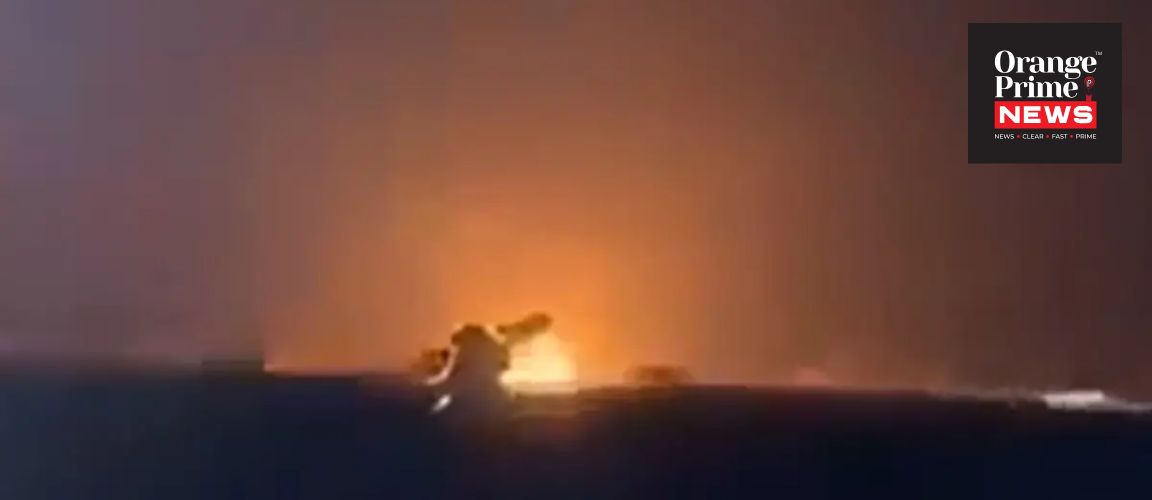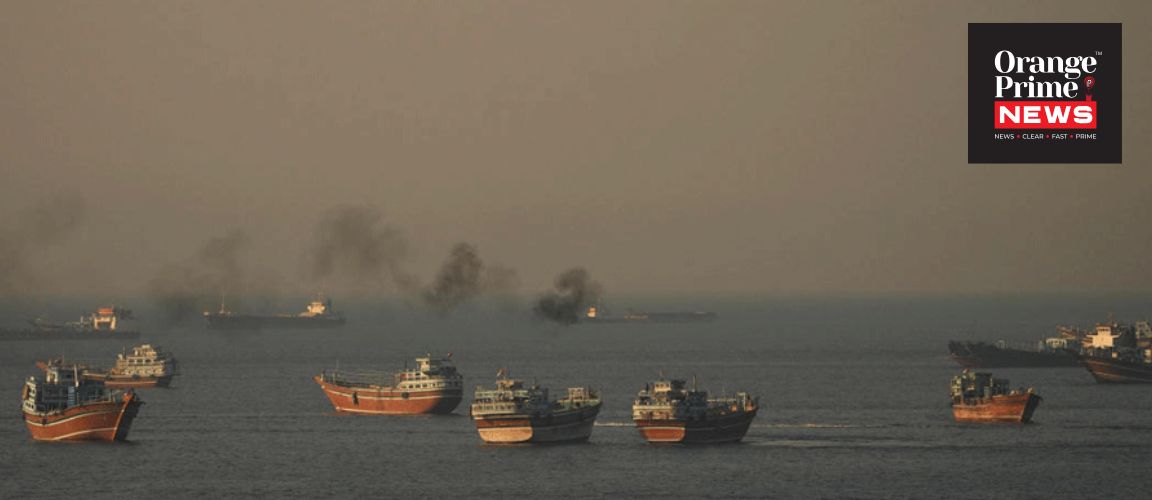
Tensions in West Asia escalated sharply on Tuesday after the United States carried out another round of military strikes against Iran, prompting immediate retaliation from Tehran that targeted Bahrain and two commercial oil tankers sailing through the Strait of Hormuz.
The renewed hostilities followed US President Donald Trump's announcement that Washington would restore a blockade against Iran in the strategic waterway, reversing arrangements reached under a recent interim understanding between the two countries.
The latest exchange of military action has heightened fears of a broader regional conflict, with governments and global markets closely monitoring developments in one of the world's most critical energy corridors.
The US Central Command confirmed that American forces had begun fresh operations against Iranian targets, describing the strikes as part of an effort to weaken Tehran's military capabilities and protect commercial shipping in the Gulf.
According to the US military, the operation is intended to reduce Iran's ability to threaten civilian vessels and international maritime traffic passing through the Strait of Hormuz.
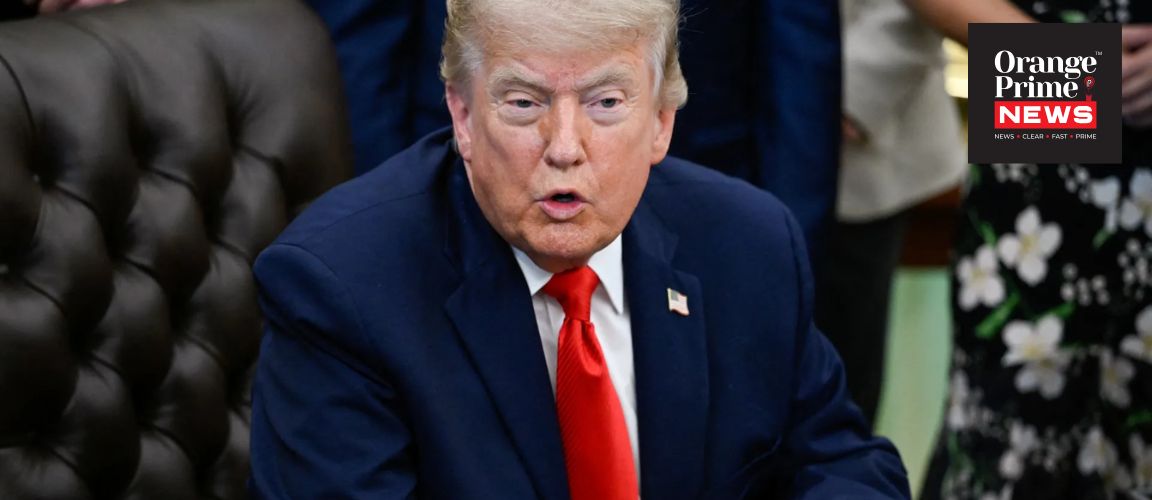
Soon after the military announcement, President Trump addressed reporters at the White House, confirming that the strikes formed part of a broader campaign against Iran.
He said American forces were conducting sustained operations to degrade Iran's offensive capabilities and asserted that the United States was re-establishing control over maritime security in the region.
Trump also declared that Washington was restoring what he described as a blockade against Iran in the Strait of Hormuz, signalling a major shift in the administration's strategy.
The president further indicated that commercial vessels using the strategic waterway could be required to contribute financially for American security protection.
According to Trump, the United States has borne the cost of safeguarding international shipping for decades and believes other nations benefiting from secure maritime routes should share those expenses.
The remarks represent a significant departure from longstanding American policy, which has traditionally supported unrestricted navigation through international waterways without imposing transit charges.
For decades, the United States Navy has maintained that major sea lanes, including the Strait of Hormuz, should remain open to global commerce under internationally recognised principles of freedom of navigation.
Analysts say any move to impose transit fees or restrictions in one of the world's busiest shipping corridors could have far-reaching legal, diplomatic and economic consequences.
The Strait of Hormuz remains one of the most strategically important waterways in the world, connecting the Persian Gulf with the Arabian Sea and serving as a vital route for global energy supplies.
A substantial share of the world's crude oil and liquefied natural gas exports passes through the narrow passage, making any disruption capable of affecting international energy markets.
Reflecting investor concerns, benchmark Brent crude prices climbed above 84 US dollars per barrel, reaching their highest level in about a month following the renewed fighting.
Although prices remain below the peaks recorded earlier during the conflict, analysts warned that continued military escalation could place fresh upward pressure on fuel costs worldwide.
Iran responded swiftly to the American strikes by launching missile attacks targeting Bahrain and two oil tankers associated with the United Arab Emirates that were travelling through the Strait of Hormuz.
According to the UAE Ministry of Defence, two cruise missiles struck the tankers Mombasa and Al Bahiyah while they were sailing through the southern shipping lane in Omani territorial waters.
The missile strikes triggered fires aboard both vessels, although emergency crews later succeeded in bringing the blazes under control.
The attack resulted in the death of one Indian crew member and injuries to eight others, including six Indian nationals and two Ukrainian sailors.
Some of those injured were reported to be in serious condition and are receiving medical treatment.
The UAE strongly condemned the missile strikes, describing them as a serious violation of international law and an unacceptable attack on civilian shipping.
In a statement, the Emirati government warned that it reserved the right to respond and would take all necessary measures to protect its territory, citizens and commercial interests.
The country's defence authorities also announced that the armed forces remained on heightened operational readiness in anticipation of further regional threats.
Iran's Islamic Revolutionary Guard Corps claimed responsibility for targeting the vessels, alleging that the tankers had ignored repeated warnings while travelling through waters that Tehran considered unsafe.
The Guard asserted that the ships continued their voyage despite what it described as a designated minefield and were therefore intercepted.
The claims have not been independently verified.
Meanwhile, Bahrain also came under renewed missile attack during the early hours of Tuesday.
Authorities activated nationwide missile warning sirens and advised residents to seek shelter as defensive systems responded to the incoming threat.
Officials did not immediately report casualties or major damage following the attack.
The latest escalation comes only weeks after Washington and Tehran had appeared to move towards reducing hostilities under an interim understanding that eased certain restrictions on maritime activity.
Under that arrangement, the United States had relaxed an earlier blockade while both sides committed to keeping the Strait of Hormuz open for international commerce.
However, repeated exchanges of fire in recent days have undermined confidence in that fragile understanding.
President Trump argued that Iran had failed to honour its commitments under the agreement and said the renewed blockade was necessary following Tehran's actions.
He maintained that the United States would continue military operations until it achieved its strategic objectives in the region.
Iran, meanwhile, has insisted that it possesses the authority to regulate maritime traffic passing through the Strait of Hormuz and has defended its actions as consistent with its interpretation of the interim agreement.
The United States rejects that interpretation and continues to insist that international shipping lanes must remain accessible without interference.
The dispute over navigation rights has further complicated efforts to restore stability in the Gulf.
International maritime organisations have previously explored alternative shipping routes designed to reduce risks for commercial vessels travelling through the region.
However, recurring military confrontations have continued to expose civilian ships to potential attacks, increasing concerns among shipping companies and insurers.
The latest violence also carries wider geopolitical implications, as several Gulf nations maintain close security partnerships with Washington while seeking to avoid becoming directly involved in a prolonged regional conflict.
Diplomatic observers warn that further retaliatory strikes could draw additional countries into the confrontation, increasing instability across West Asia.
The deaths and injuries suffered by foreign sailors, including Indian nationals, have also highlighted the growing risks faced by civilian crews operating in one of the world's busiest maritime corridors.
As military operations continue and diplomatic efforts remain stalled, the Strait of Hormuz once again finds itself at the centre of a crisis with the potential to disrupt global trade, energy supplies and regional security.