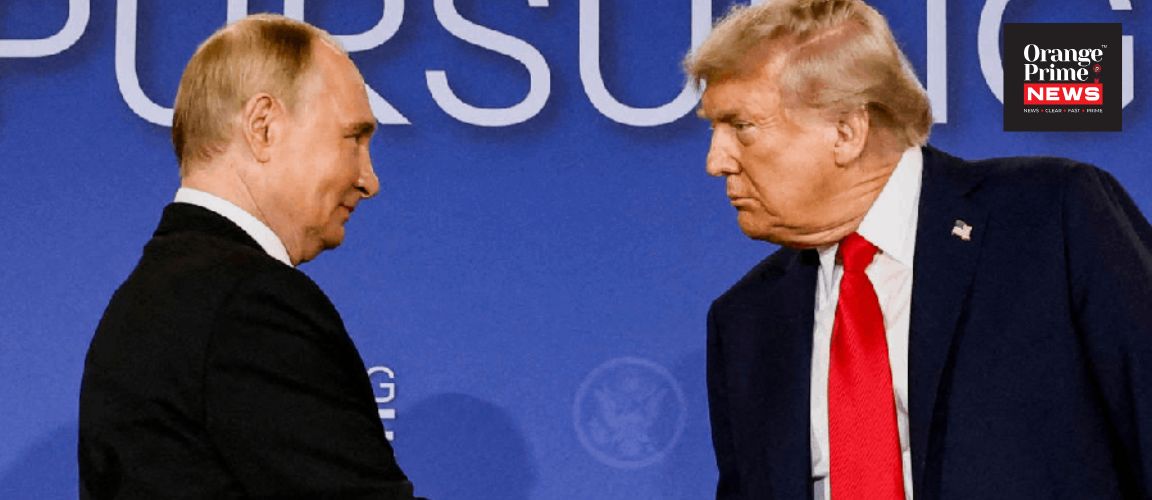
Trump announces Russian diesel supply agreement
US President Donald Trump has announced an agreement under which Russia will supply diesel to American and international markets, presenting the arrangement as a way to bring down fuel costs. The announcement came after a telephone conversation with Russian President Vladimir Putin on Friday and was followed by a temporary authorisation from the US Department of the Treasury covering transactions involving Russian-origin diesel.
In a post on his Truth Social platform, Trump said Russia would initially provide more than 300,000 tonnes of diesel. He added that a further 500,000 tonnes would arrive in November, followed by another one million tonnes, although the timing of the subsequent deliveries was not clearly specified in the reported announcement.
Trump also referred to a potential delivery of three million tonnes of diesel within a short period, linking the proposed supply to the operating condition of Russian refineries.
The US President portrayed the agreement as an important step towards reducing energy costs, which have become a growing concern for households and businesses. Diesel is particularly significant for agricultural operations, freight transportation and other industries that depend heavily on fuel-intensive machinery.
In another social media post, Trump said that control over the Strait of Hormuz, together with the Russian energy announcement, would help bring diesel prices down rapidly. He described lower fuel costs for farmers, ranchers and truck drivers as a major priority for his administration.
Trump also reiterated his position that Iran must not be allowed to acquire nuclear weapons, placing the announcement within the wider context of tensions affecting international energy markets.
US Treasury authorises Russian diesel transactions
Following Trump’s announcement, the US Treasury Department issued a licence permitting transactions involving diesel originating in Russia, including imports into the United States, until April 7, 2027.
The authorisation temporarily permits specified activities that would otherwise be restricted under US sanctions regulations concerning Russia. The reported licence allows covered transactions related to the sale, delivery, unloading and importation of Russian-origin diesel during the authorised period.
The decision represents a change in the restrictions governing this category of Russian energy trade. However, the authorisation should not automatically be interpreted as a complete removal of all US sanctions against Russia, since its scope is tied to the transactions and products specified in the licence.
The development comes after the US Congress passed legislation on September 16 aimed at imposing substantial tariffs on major purchasers of Russian oil and gas. Trump signed the Sanctioning Russia and Iran Act into law two days later, according to the supplied report.
That sequence has raised questions among critics about the administration’s approach to economic pressure on Moscow. While the sanctions framework was presented as a means of increasing costs for Russia and countries purchasing its energy products, the new diesel authorisation has created a different route for a specified category of transactions.
US Senator Richard Blumenthal, who co-authored the legislation with Republican Senator Lindsey Graham, criticised Trump’s decision. Blumenthal described the agreement with Putin as an embarrassment and had previously urged countries such as China and India to stop purchasing Russian oil.
The controversy highlights the tension between two objectives facing the administration: containing Russia’s financial resources and responding to domestic pressure to lower fuel prices.
Zelenskyy warns that easing restrictions could benefit Moscow
Ukrainian President Volodymyr Zelenskyy strongly criticised the decision, arguing that permitting Russia to sell more petroleum products could help finance its continuing military campaign.
The announcement came while a Ukrainian delegation was in the United States for discussions related to resolving the war. Zelenskyy characterised the decision as a weak response from partners capable of taking stronger action against Moscow.
In a social media statement, the Ukrainian President argued that additional revenue from diesel sales would not encourage peace. Instead, he warned that the funds could support further Russian military operations.
Zelenskyy’s criticism reflects Kyiv’s broader position that economic restrictions remain an important instrument for limiting Russia’s ability to sustain the war. Ukraine has repeatedly called on Western governments to maintain pressure on Moscow and reduce its earnings from energy exports.
The diesel arrangement has therefore raised concerns in Ukraine that a measure designed to stabilise international fuel markets could weaken the economic pressure applied to Russia.
The disagreement also illustrates the competing priorities of the countries involved. Washington is facing domestic concerns over energy prices, while Kyiv maintains that measures providing Russia with additional export opportunities could undermine efforts to end the conflict.
Republicans and Democrats question Trump’s decision
Opposition to the diesel authorisation has not been limited to Democrats. Several Republican lawmakers have also expressed concern that easing restrictions could provide financial support to the Kremlin.
Republican Representative Don Bacon criticised the administration for relaxing pressure on Moscow at a time when Ukraine continues to face Russian attacks. He argued that the recently passed sanctions legislation should be used to increase pressure on Russia rather than create additional opportunities for its energy exports.
Bacon also referred to American public support for Ukraine and described the administration’s Russia policy as misguided. He called for a clearer approach to the conflict, arguing that revenue generated through energy sales could ultimately support Russia’s military operations.
Democratic Representative Dave Min of California also criticised the arrangement. In a social media post, he suggested that continued oil deals with Russia could create a situation in which the United States undermines its own sanctions objectives.
Republican Representative Michael McCaul of Texas acknowledged the administration’s desire to reduce diesel prices but warned that relaxing restrictions on Russian oil could strengthen the Kremlin’s ability to sustain the war.
McCaul argued that additional revenue for Russia risked contributing to further violence and destruction in Ukraine.
The criticism from both parties suggests that the decision could become a contentious issue in Washington, particularly as lawmakers debate the relationship between domestic economic priorities and US support for Ukraine.
High diesel prices increase pressure ahead of midterm elections
Fuel prices have emerged as a significant economic concern for the Trump administration ahead of the November 3 midterm elections, when control of Congress will be contested.
According to the American Automobile Association figures cited in the supplied report, the average US diesel price reached $6.28 per gallon on Thursday, compared with $3.68 a year earlier.
The increase has added pressure on businesses and consumers. Diesel is widely used in commercial trucking, farming, construction and other sectors, meaning sustained price increases can raise transportation and production costs across the economy.
Global energy markets have also faced disruptions linked to conflicts involving Iran and Ukraine. Attacks on Russian refineries have reportedly affected production, while restrictions imposed by Moscow on diesel exports have further complicated supply conditions.
The report also cites attacks by Houthi militants affecting refineries in Saudi Arabia as another factor contributing to tighter supplies.
Against this backdrop, the administration has been searching for ways to increase the availability of fuel and prevent prices from remaining elevated. The Russian diesel arrangement is one such measure, although its longer-term impact remains uncertain.
Following Trump’s announcement, diesel prices reportedly declined, while US diesel futures fell by nearly five per cent to $4.64 per gallon.
However, a short-term movement in futures prices does not necessarily guarantee a lasting reduction in prices paid by consumers and businesses. The eventual effect will depend on the quantity of fuel actually delivered, the timing of shipments, refinery operations and wider developments in international energy markets.
Energy analysts question whether the agreement will be enough
Some market observers have questioned whether the announced Russian supply would be sufficient to ease the broader diesel shortage.
Oil market researcher Rory Johnston, founder of CommodityContext.com, dismissed the agreement as having limited significance, arguing that Russia normally exports substantially larger volumes of diesel when its refineries are operating without major disruption.
Jim Mitchell, an analyst at consultancy Wood Mackenzie, offered a more measured assessment. He said the arrangement could provide an additional source of supply to a market already facing tight conditions, while suggesting it was not a comprehensive solution.
The analysts’ comments point to a key limitation of the deal: additional supply can help alleviate pressure, but its impact depends on how much fuel reaches the market and how quickly it becomes available.
The arrangement also does not eliminate the underlying geopolitical risks affecting energy production and transportation. Further attacks on infrastructure, export restrictions or disruptions to shipping routes could continue to influence prices.
For that reason, the immediate decline in diesel futures may not translate into a sustained reduction unless supply conditions improve more broadly.
Trump considers additional steps to increase US fuel production
The Russian diesel arrangement follows an earlier proposal by Trump to prohibit US diesel exports. The administration reportedly shelved that plan after oil and gas industry representatives warned that restricting exports could disrupt international supplies and potentially push prices even higher.
Separately, three industry sources cited in the report said Trump was expected to issue a directive asking selected federal department heads to examine additional measures to control diesel prices.
The proposed directive could take the form of a presidential memorandum. Officials may be asked to explore ways to address local and state regulations that restrict certain energy-production activities, as well as the possible use of the Defence Production Act.
The Defence Production Act, a Cold War-era law, gives the US President powers to support domestic production of materials considered essential to national security. Depending on the action taken, the law can enable government-backed loans or loan guarantees and allow the administration to require companies to prioritise certain government contracts.
The White House has reportedly considered using these powers to expand domestic refining capacity as international conflicts expose the risks of supply disruptions and sharp price increases.
However, industry executives have reportedly advised administration officials that improving existing refineries or expanding current facilities could be more practical than financing entirely new plants. New refineries would require substantial investment and could take years to become operational.
The debate underlines the difficulty of addressing fuel-price pressures quickly. While additional imports may help meet immediate demand, expanding domestic refining capacity requires planning, investment and time.
A difficult balance between energy affordability and sanctions policy
Trump’s diesel arrangement with Russia places two policy objectives in direct tension. The administration wants to increase fuel availability and reduce costs for American consumers and businesses, but critics argue that easing restrictions on Russian energy exports could weaken the economic pressure intended to constrain Moscow.
The immediate price reaction has offered the White House a potential argument that the move could help stabilise the market. Yet analysts have questioned whether the announced volumes will be enough to produce a lasting improvement.
For Ukraine and lawmakers opposed to the decision, the central concern is the possibility that additional Russian energy revenue could support the war. For the administration, the challenge is to demonstrate that the measure delivers meaningful relief without undermining its broader foreign-policy objectives.
The eventual impact will depend on the implementation of the Treasury authorisation, the delivery of the promised fuel and the direction of global energy prices in the coming months.