Deadly strike hits Saudi capital’s main airport
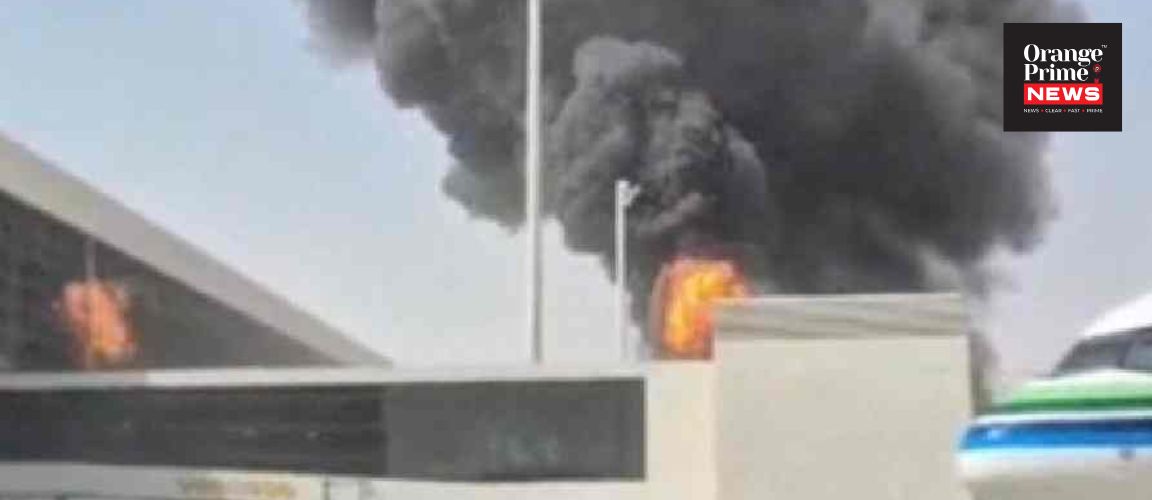
A missile attack on a section of King Khalid International Airport in Riyadh has left at least 12 people dead and more than 300 injured, according to Saudi civil aviation authorities. Some of those hurt were reported to be in critical condition and were receiving treatment at hospitals across the country.
The strike reportedly hit a complex containing Terminals 3 and 4, which serve domestic flights. A regional official familiar with the incident said the missile struck the airport facility but spoke anonymously because they were not authorised to comment publicly.
Saudi authorities said the victims included four Saudi nationals and citizens of several other countries. The reported fatalities included two Bangladeshis, one Palestinian, one American, one Egyptian, one Jordanian, one Syrian and one Sudanese national.
The scale of the casualties has made the incident one of the most serious attacks reported in a Gulf Arab country since the Iran war began. It also highlights the growing danger to civilian infrastructure as the conflict spreads beyond its earlier fronts.
The Saudi-led coalition fighting the Houthis in Yemen blamed the Iran-backed group for the strike. The coalition described the attack as a serious violation of international law, calling it a fully fledged war crime, and said a strong response would follow.
The Houthis had not issued an immediate statement accepting responsibility for the latest airport attack.
Trump considers possible US military involvement
The strike is expected to intensify Saudi Arabia’s efforts to secure military assistance from its international partners, particularly the United States. Riyadh has so far appeared reluctant to enter an unrestricted conflict with the Houthis, but repeated attacks on its airports and other strategic facilities have increased pressure on the kingdom to respond.
US President Donald Trump said on Saturday that his administration was considering whether American forces should participate in Saudi strikes against the rebels.
Asked about the possibility of joining the campaign, Trump said the United States would examine the situation before deciding. He indicated that the administration had only recently received information about the latest attack and that a decision could be made quickly.
His remarks leave open the possibility of a wider American role in the fighting. Any direct US participation could further internationalise the conflict, particularly given Washington’s existing confrontation with Iran and the Houthis’ links to Tehran.
The United States has already provided forms of assistance connected to the Saudi-led campaign, including intelligence sharing, identifying potential targets and operational planning, according to officials familiar with the military cooperation.
The extent of any additional support, however, remains unclear.
Saudi airport operations suspended after repeated attacks
The latest strike came after several days of reported attacks targeting King Khalid International Airport and other Saudi facilities.
Earlier in the week, the Houthis claimed responsibility for attacks on the Riyadh airport that reportedly killed three Saudi nationals, including a pilot. Other reported targets have included airports, military installations and oil infrastructure.
The escalation followed the launch of a major offensive by a Saudi-led coalition supporting Yemen’s internationally recognised government. The campaign aims to reverse recent territorial gains made by Houthi forces, particularly in areas near the Red Sea.
Saudi civil aviation authorities announced the suspension of airport operations following the latest attack. Security measures were tightened, with a heavy police presence reported around the complex and entrances blocked. Lights around parts of the airport were also dimmed as authorities managed the emergency.
Flights were diverted to other airports, according to flight-tracking service Flightradar24. The United States, United Kingdom, Germany, Australia and Canada also issued warnings advising their citizens to avoid the airport.
The disruption has added to mounting uncertainty for travellers and airlines operating across the region. With the Houthis threatening further attacks against aviation targets, carriers are facing growing pressure to reassess the safety of routes serving Saudi Arabia.
Airlines suspend services as security concerns deepen
The Houthis had warned international airlines against continuing to operate in Saudi airspace, describing the area as part of their military theatre. Their warning raised concerns that commercial aviation could become a more prominent target as hostilities intensified.
Even before the latest strike, several major airlines had suspended or adjusted flights to Saudi Arabia for varying periods. The carriers named in reports included Air India, FlyDubai, Lufthansa Group and Pakistan International Airlines.
The European Union Aviation Safety Agency had also broadened its guidance concerning Saudi airspace. Its assessment reportedly highlighted the Houthis’ capacity to strike targets farther inside the kingdom, including Riyadh, and pointed to increased attention being directed towards aviation infrastructure.
Such warnings could have wider consequences for regional connectivity. Riyadh is a major transport hub, and prolonged airport closures or repeated flight suspensions could affect passengers, business travel and international air links.
Airlines must weigh the risks of operating in an increasingly volatile environment against the disruption caused by rerouting or cancelling services. The situation may change rapidly depending on further attacks, military responses and updated aviation safety assessments.
Iran gains another avenue to pressure a key US partner
The confrontation has wider strategic implications because Saudi Arabia is one of Washington’s most important partners in the Gulf and the world’s leading oil exporter.
The Houthis had largely remained on the sidelines of the Iran war until the recent escalation. Their involvement has now created another pressure point for Tehran, allowing the conflict to threaten Saudi security and key transport and energy facilities.
The relationship between Saudi Arabia and the Houthis has been shaped by Yemen’s prolonged civil war. Saudi forces entered the conflict in 2015 in support of the internationally recognised Yemeni government against the Houthi movement, which controls the capital, Sanaa, and other parts of the country.
A ceasefire in 2022 brought a period of relative calm, but that understanding broke down in July, according to the account of recent events. The Houthis resumed attacks after accusing Saudi Arabia of striking Sanaa International Airport while an Iranian aircraft was attempting to land.
The renewed violence has also revived tensions surrounding the Saudi-led blockade, which has restricted access to Houthi-controlled areas for years.
The latest fighting has become more intense as coalition air power supports Yemeni government forces attempting to recover territory near the Red Sea. Houthi gains in the area have reportedly improved the group’s ability to monitor shipping along an important maritime corridor.
That corridor has strategic significance because it offers an alternative route to the Strait of Hormuz, where Iran has also been attacking vessels during the wider conflict.
The possibility of simultaneous threats to aviation, oil infrastructure and maritime shipping has increased concern about the economic consequences of a prolonged regional confrontation.
Saudi Arabia faces pressure on air defence supplies
The frequency of attacks has raised questions about Saudi Arabia’s ability to maintain its air defences over an extended period.
Regional officials previously told The Associated Press that Saudi Arabia was running low on missile interceptors and had sought additional air-defence assistance from France, Britain, Pakistan and Egypt. One official also noted that the United States had experienced a reduction in its own interceptor stocks during the war with Iran.
The reported shortage is significant because defending against repeated missile and drone attacks can consume large quantities of expensive interception systems. A sustained campaign could place additional pressure on Saudi military resources and its partners’ inventories.
The extent of the kingdom’s current stockpile and the status of any requests for foreign deployments were not independently established in the account of the latest strike.
Diplomatic efforts have continued alongside the military escalation. Saudi Arabia said its foreign minister had spoken by telephone with his Omani counterpart on Saturday, with both sides stressing the importance of diplomatic solutions to reduce regional tensions.
Oman has previously played a mediating role in regional disputes and is strategically positioned across the Strait of Hormuz from Iran. Its diplomatic engagement could become more important if the latest attacks lead to further retaliation.
Energy markets and regional stability under pressure
The latest violence has unsettled markets because of the potential threat to Saudi Arabia’s energy infrastructure and its role in global oil supplies.
Saudi Arabia’s energy ministry continued promoting a major international energy conference scheduled to begin in Riyadh on Sunday, even hours after the airport attack. The move underlined the kingdom’s effort to maintain normal economic and diplomatic activity despite the deteriorating security situation.
However, continued attacks on oil facilities, airports and shipping routes could increase uncertainty for energy producers, transport operators and international investors.
The consequences would extend beyond Saudi Arabia if the conflict threatens important maritime corridors or prompts additional countries to become involved militarily. A direct US role against the Houthis, in particular, could trigger further escalation and complicate diplomatic efforts to contain the war.
For now, the immediate priorities remain assessing the casualties, restoring safe airport operations and determining the next steps in the Saudi-led military campaign.
The latest strike has demonstrated the growing reach of the conflict and the vulnerability of civilian infrastructure. Whether Washington chooses to expand its involvement may prove decisive in determining whether the confrontation remains geographically limited or develops into a broader regional war.