Karnataka’s final voter list records a drop of 99.32 lakh names
The Election Commission has published Karnataka’s final electoral rolls following the SIR exercise, reporting a substantial reduction in the number of registered voters.
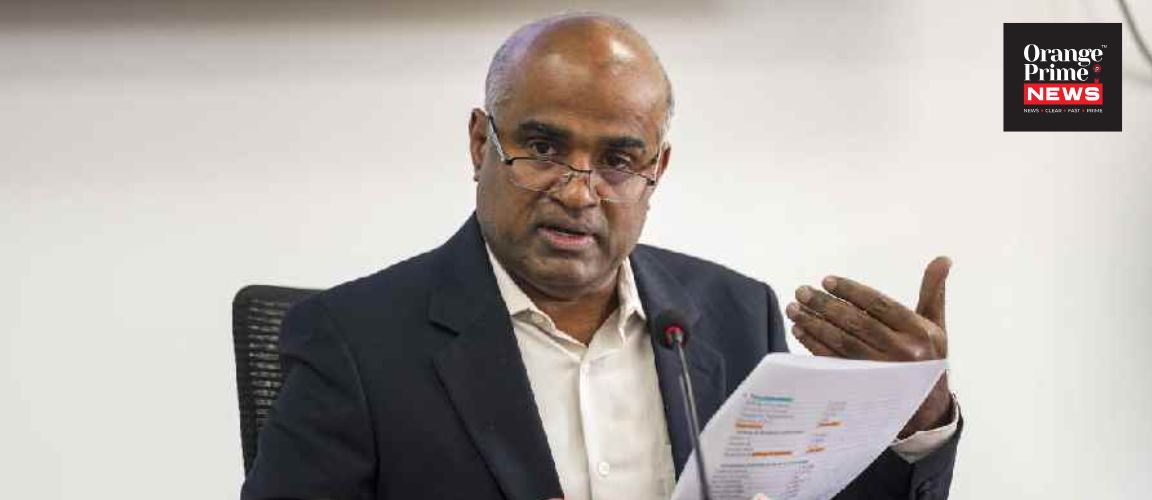
According to data presented by Karnataka Chief Electoral Officer V. Anbukkumar in Bengaluru on Tuesday, the electorate declined from 5,54,32,314 voters to approximately 4.55 crore. The reported reduction stands at 99.32 lakh names.
The exercise involved verifying existing voter registrations and identifying entries that officials classified as deceased, permanently shifted, duplicated or falling into other categories requiring removal.
However, the revision also resulted in the restoration of names that had been omitted from the draft list. Officials said 8.64 lakh such voters were included in the final electoral rolls after the claims and objections process.
The figures highlight the scale of the revision and the importance of checking individual entries in the updated voter list, particularly for people whose names were missing from the draft rolls.
Permanently shifted voters form the largest deletion category
Voters classified as permanently shifted accounted for the largest share of deletions, according to the Chief Electoral Officer’s office.
The data showed that 65.45 lakh names were placed in this category, representing approximately 11.8 per cent of the electorate recorded before the revision. The classification formed part of the broader ASDDO category, which covers absent, shifted, dead, duplicate and other entries identified during the verification exercise.
The scale of the permanently shifted category makes the verification process particularly significant. Changes in residence can affect electoral registration, but an individual’s absence from an address does not, by itself, establish every circumstance surrounding their eligibility or current registration.
The Election Commission’s stated process involved field-level verification and a period during which voters could raise claims and objections. The final figures reflect the outcome reported by the state election authorities after that process.
Officials identify 16 lakh deceased voters and seven lakh duplicates
Anbukkumar said verification found approximately 16 lakh voters who had died. Their names were removed from the electoral rolls.
Officials also identified and removed around seven lakh duplicate entries. Such entries can arise when a voter’s details appear more than once in electoral records, although the supplied report does not provide a detailed breakdown of how the duplicates were detected or resolved.
The removal of deceased and duplicate entries is intended to improve the accuracy of electoral rolls. At the same time, the scale of any revision makes transparent procedures for verification and correction important, especially where a person believes their name has been wrongly deleted.
The Election Commission’s claims and objections mechanism provides a route for eligible voters to seek corrections or inclusion. Voters should check the final list rather than assume that an earlier registration guarantees their name remains on the updated roll.
Claims and objections lead to additions and deletions
During the claims and objections period, approximately 10.08 lakh voters were added to the electoral roll, while 1.88 lakh names were deleted.
The process also enabled the restoration of 8.64 lakh voters who had been omitted from the draft list. These figures indicate that the revision did not involve deletions alone; applications and objections resulted in changes to the list in both directions.
The Chief Electoral Officer’s office reportedly extended the process twice amid discrepancies and the large volume of cases requiring attention.
The revision began with the verification of 5,54,32,314 registered voters as of June 16. A draft roll published on August 24 had already recorded substantial deletions under the ASDDO classification.
The final list was issued after the subsequent verification and claims process. The figures released by the state authorities provide an overview of the changes, although the supplied report does not include district-wise data or a complete category-by-category reconciliation of all additions and deletions.
Women outnumber men in the revised electorate
The final electoral rolls show that women continue to account for a slightly larger share of Karnataka’s registered voters than men.
According to the reported figures, the state has approximately 2.29 crore women voters and 2.25 crore men voters. The rolls also include 2,841 third-gender voters.
These figures describe the composition of the registered electorate after the revision. They do not, on their own, indicate likely turnout or voting preferences among any group.
The updated numbers will be relevant to political parties, election officials and researchers assessing the state’s electoral profile. Their interpretation will depend on the accuracy of the underlying records and the extent to which eligible voters are correctly included.
Election officials expand field-level verification network
The SIR exercise required a substantial administrative deployment across Karnataka.
The Election Commission initially deployed 59,050 booth-level officers (BLOs), supported by 332 assistant electoral registration officers (AEROs) and 224 electoral registration officers (EROs).
As discrepancies emerged and the workload increased, the reported strength of the field-level workforce was expanded to 60,932 BLOs and 4,258 AEROs.
Political parties also appointed booth-level agents to participate during the enumeration phase. According to the report, approximately 1.33 lakh booth-level agents were appointed to help ensure that forms reached voters and to assist with objections during the subsequent stage.
The CEO’s office extended the process twice, reflecting the administrative demands of verifying a large electorate and resolving cases raised during the revision.
The effectiveness of such exercises depends not only on identifying entries that require correction but also on ensuring that eligible voters have a meaningful opportunity to confirm their details and challenge errors.
How voters can check their names in the final electoral rolls
Voters in Karnataka can check whether their names appear in the final electoral rolls through the Election Commission of India’s official website.
The basic steps are:
Visit the Election Commission of India’s official electoral-roll download page.
Select Karnataka and choose the relevant district and Assembly constituency.
Select the appropriate electoral-roll part or polling-area section.
Download the available PDF and search for your name.
Check the details listed against your entry, including the part number and serial number.
Voters can also use the Election Commission’s voter-services facilities to search for their registration details. They should rely on official election websites rather than unofficial copies of electoral rolls.
Anyone who finds that their name is missing or that their personal details are incorrect should consult the relevant electoral registration officer or official voter-services portal to determine the appropriate procedure for correction or inclusion.
A previous voter ID card should not be treated as a substitute for checking the current electoral roll. Voters should verify their registration well before an election so that any discrepancy can be addressed through the prescribed process.
Accuracy and access remain central to electoral-roll revision
The Karnataka SIR has resulted in a reported reduction of nearly 99.32 lakh names, with permanently shifted voters forming the largest deletion category. Officials have also reported the removal of deceased and duplicate entries, alongside the restoration of names following claims and objections.
The final figures provide an overview of the scale of the exercise, but the aggregate totals alone do not establish whether every individual deletion was correct. That requires examination of the underlying records and the procedures followed in individual cases.
For voters, the immediate priority is to confirm that their names and details appear correctly in the final rolls. For election authorities, the challenge is to maintain accurate records while ensuring that eligible citizens are not excluded because of errors or unresolved discrepancies.