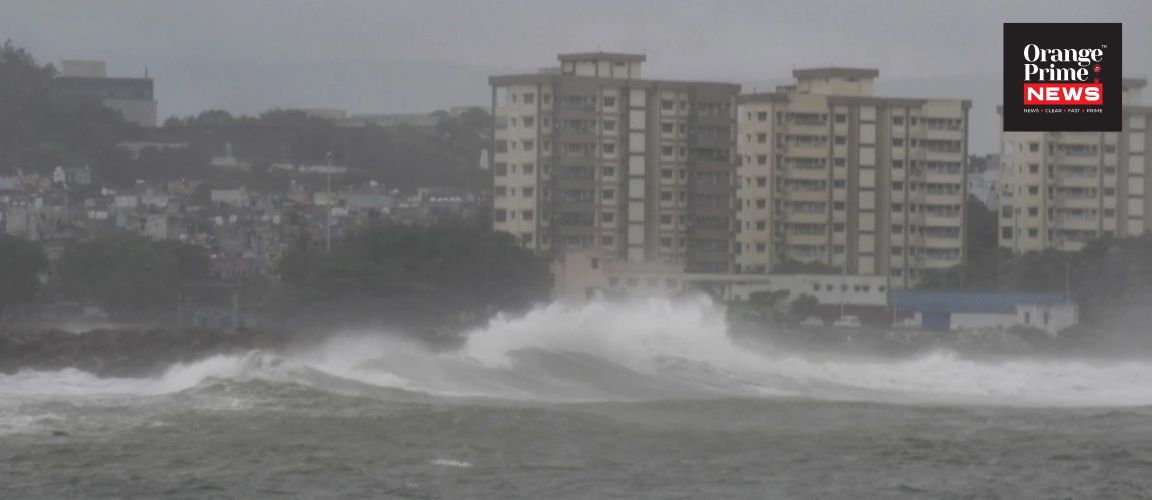
Cyclone completes landfall and begins weakening
Very Severe Cyclonic Storm Arnab crossed the Andhra Pradesh and Yanam coasts on Wednesday morning before weakening into a severe cyclonic storm, according to the report citing the India Meteorological Department (IMD).
The storm brought powerful winds and heavy weather to parts of the coastline, uprooting trees and electricity poles, damaging roads and disrupting power supplies. Officials began clearing debris as the system moved inland.
The IMD located the landfall near the Andhra Pradesh coast, southwest of Yanam and close to Narsapur. The reported peak wind speed reached 135 kmph, with gusts of up to 150 kmph.
Although the cyclone had weakened after crossing the coast, officials continued to monitor conditions and assess the damage. The immediate priorities were to restore road connectivity, repair electricity infrastructure and ensure that vulnerable residents remained safe.
Chandrababu Naidu orders swift restoration
Chief Minister N. Chandrababu Naidu reviewed the response during a teleconference involving approximately 32,000 personnel, including district collectors.
He directed officials to minimise property damage and restore normalcy in affected areas as quickly as possible. According to a statement attributed to the Chief Minister, no loss of life had been reported at the time of the briefing.
Naidu credited the administration's advance precautionary measures for helping prevent casualties. The situation remained subject to further assessment as teams continued to inspect affected areas.
The Chief Minister instructed officials to remove fallen trees and clear blocked roads within two hours wherever possible. He also directed them to prioritise national highways so that essential transport and emergency movement could resume without unnecessary delay.
Electricity restoration was to proceed once strong winds subsided and conditions allowed repair crews to work safely.
Naidu also stressed the need to maintain essential supplies at cyclone shelters, including food, drinking water and medical facilities. Officials were asked to remain prepared to respond to public health and other emergencies during the recovery phase.
Agriculture and rural infrastructure under watch
The Chief Minister directed officials to take steps to prevent water from entering agricultural fields and to protect horticultural crops from further damage.
Authorities were also asked to monitor tanks and canals and take preventive measures against possible breaches. Such checks are important after a cyclone because heavy rainfall and runoff can place pressure on water-storage structures and drainage systems.
Officials were instructed to prepare preliminary estimates of crop losses. These assessments would help determine the extent of agricultural damage and the support that affected farmers might require.
Naidu also ordered National Disaster Response Force (NDRF) and State Disaster Response Force (SDRF) personnel to remain ready for further rescue and emergency operations.
The administration was directed to use the Manamitra system to receive and address public grievances in affected areas, with complainants to be informed about the action taken on their requests.
Kakinada reports widespread tree damage and power disruption
Kakinada was among the districts affected by strong winds during the cyclone's passage.
Superintendent of Police G. Bindu Madhav said hundreds of trees and fewer than 100 electricity poles had been uprooted in the district. He added that no major damage had been reported in the preliminary assessment.
Residents from vulnerable areas had been moved to relief camps as a precaution and remained there while strong winds affected the region overnight.
The Uppada coastal road was reportedly washed away, highlighting the impact on local transport infrastructure. According to the police official, rainfall was relatively limited in parts of the district, while gusty winds caused much of the reported damage.
Restoration teams were engaged in removing fallen trees and addressing obstructions. Officials continued to assess roads and other infrastructure before determining when affected routes could safely reopen.
The district administration's immediate challenge was to restore access while ensuring that workers were not exposed to dangerous weather conditions or unstable infrastructure.
Konaseema faces blocked roads and electricity outages
Konaseema district also experienced strong winds, fallen trees and electricity disruptions.
Superintendent of Police Rahul Meena said winds reportedly reached up to 130 kmph, uprooting trees and power poles and blocking roads. He said no casualties or property damage had been reported at the time of his preliminary assessment.
More than 10,000 people had reportedly been evacuated from low-lying areas and moved to safer shelters. Around 495 cyclone shelters and temporary relief centres had been established, according to the information provided by the official.
The administration reported no village inundation at the time of the briefing. Water that had accumulated due to the storm surge had also drained, Meena said.
Electricity connections were expected to be restored within a few hours, while officials aimed to clear major highways within two to three hours. Clearing smaller interior roads could take longer, potentially extending into the evening.
Two NDRF teams and two SDRF teams had been deployed a day before the cyclone to support road clearance and rescue operations. Additional Andhra Pradesh Special Police personnel and staff from other departments were also involved in the response.
The restoration effort was focused on reopening key routes, repairing power infrastructure and helping residents return to normal activities once local conditions were considered safe.
Limited impact reported in Alluri Sitaramaraju district
Alluri Sitaramaraju district reported a comparatively limited impact as of 9am, although some trees and electricity poles had been uprooted and certain roads were inundated.
Superintendent of Police Amit Bardar said no casualties or major damage to infrastructure, houses or livestock had been reported at that stage. He cautioned, however, that officials were continuing to monitor the situation because further rainfall could cause water levels to rise.
An old bridge in Tadiguda village, located in Anantagiri mandal, was reportedly washed away, leaving a hamlet isolated. Authorities were working on alternative arrangements while restoration operations continued.
The incident illustrates how damage to individual bridges and local roads can disrupt access to remote settlements even when the broader district reports limited damage.
Officials were expected to continue inspecting vulnerable locations and assessing whether additional measures were required to protect residents from rising water levels.
Relief teams continue clearance and recovery operations
Emergency personnel and local officials were working across affected districts to remove debris, reopen roads and restore essential services.
The response included clearing fallen trees and electricity poles, checking damaged infrastructure and assisting people who had been moved to relief camps before the storm's arrival.
The administration's next priorities included completing preliminary damage assessments, protecting agricultural areas and ensuring that residents had access to basic supplies.
While the absence of reported casualties was an encouraging early development, the figures remained preliminary. A fuller assessment of damage to homes, roads, power infrastructure and crops would depend on inspections carried out after conditions improved.
Focus shifts from landfall to restoring normalcy
With Cyclone Arnab having crossed the coast and weakened, the focus in Andhra Pradesh shifted towards recovery and the restoration of essential services.
Naidu's instructions placed particular emphasis on clearing major roads, restoring electricity, maintaining relief facilities and preparing estimates of agricultural damage.
District-level reports indicated that strong winds had caused significant disruption in some locations, even where officials had not reported major structural damage or casualties.
Authorities continued to monitor rainfall and water levels while emergency teams worked to reconnect affected communities.
The situation remained subject to change as further assessments were completed. For residents, officials' instructions and local safety advisories remained important, particularly in areas where roads, bridges or electricity infrastructure had been damaged.