India signals no interest in revisiting the EPG report
The recommendations of the Eminent Persons Group for Nepal-India Relations (EPG-NIR), finalised in 2018 after two years of discussions, appear unlikely to shape the current direction of bilateral ties.
Speaking to reporters on Monday, Foreign Secretary Vikram Misri said India wanted to move forward rather than revisit earlier discussions.
“I would say that (EPG) is in the past. We are looking at a forward-looking approach to this particular issue. We are not looking backwards, and to me, therefore, the report that you have mentioned is not relevant; it pertains to the past,” Misri said.
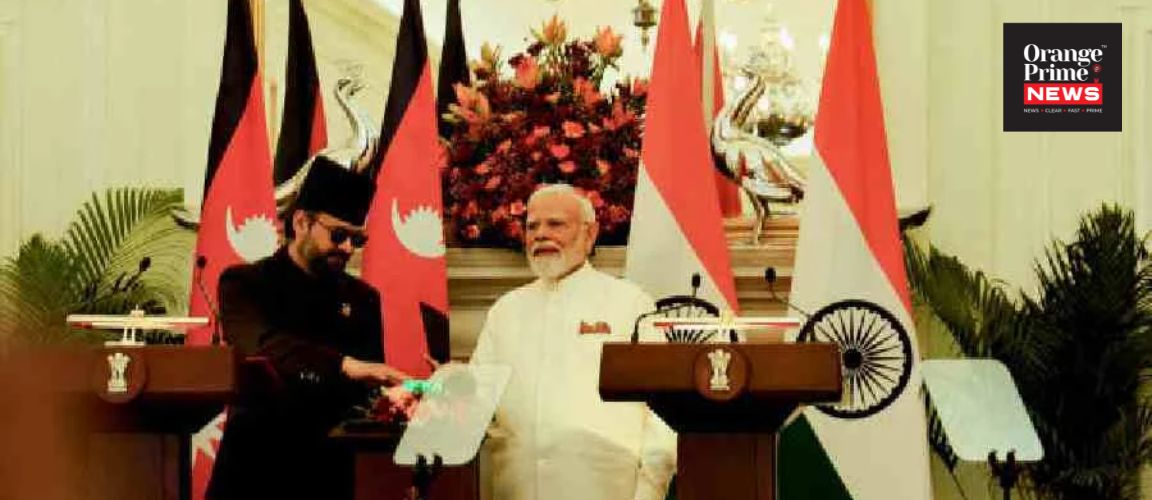
The remarks came during the visit of Nepal Prime Minister Balen Shah to New Delhi. They have effectively clarified New Delhi’s position on a report that had remained pending since its completion in 2018.
The eight-member EPG was established in 2016 following an initiative by the prime ministers of both countries. Its mandate was to examine the full range of India-Nepal relations and recommend ways to strengthen the partnership.
Two years of discussions produced a consensus report
The committee was jointly headed by former Uttarakhand chief minister Bhagat Singh Koshyari and former Nepal foreign minister Bhekh Bahadur Thapa.
India’s representatives included Mahendra P. Lama, founding vice-chancellor of Sikkim University; former Indian ambassador to Nepal Jayant Prasad; and academic B.C. Upreti.
Nepal’s other members were former law minister Nilambar Acharya, politician Rajan Bhattarai and former anti-corruption commission chief Surya Nath Upadhyay.
Between 2016 and 2018, the group held nine meetings, six in Nepal and three in India. The discussions covered several aspects of the bilateral relationship, including the India-Nepal Treaty of Peace and Friendship signed in 1950.
The members eventually reached a consensus on their recommendations. However, the report was never formally submitted to Prime Minister Narendra Modi because the group did not secure an appointment with him.
It was also not presented to Nepal’s Prime Minister. When the EPG was formed, K.P. Sharma Oli was leading the government in Kathmandu.
Former EPG member questions India's decision
Mahendra P. Lama, who served on the Indian side of the committee, said the Indian government should at least have formally accepted the report, leaving the decision on its recommendations to the authorities.
According to Lama, the government could have considered the proposals and independently decided whether to implement them.
He also acknowledged that the passage of time had affected the relevance of some recommendations. Several years have passed since the report was completed, and certain issues may no longer reflect the current political and economic circumstances.
Nevertheless, the report's failure to reach the two governments formally has left questions about the purpose and outcome of the exercise.
New joint vision document offers scope to review 1950 treaty
During Shah’s visit, India and Nepal adopted a new joint vision document intended to provide direction to their bilateral relationship.
The document recognises that existing agreements between the two countries, including the 1950 Treaty of Peace and Friendship, may be reviewed through mutual consent. Any such review would take into account contemporary political, economic and technological realities.
The provision keeps open the possibility of discussions on the treaty, even as New Delhi has indicated that the recommendations of the EPG are no longer relevant to its current approach.
The 1950 treaty has long been a significant subject in India-Nepal relations. It provides reciprocal privileges to citizens of both countries in areas including residence, property ownership, trade, commerce and movement.
Treaty review remains a sensitive issue in Darjeeling hills
The latest developments have particular significance for the Darjeeling hills, where demands for a review of the 1950 treaty have been closely connected with the political identity of Indian Gorkhas.
Several hill-based political organisations have called for the removal of Article VII, which provides reciprocal privileges to citizens of India and Nepal. Critics of the provision argue that it can blur the distinction between Indian Gorkhas and Nepali citizens, affecting the former's efforts to establish a distinct political identity within India.
The issue has a long and sensitive history in the region.
On July 27, 1986, 13 people were killed in police firing in Kalimpong during a programme organised to burn copies of the treaty, at the height of the Gorkhaland agitation. The date is observed every year as Gorkhaland Martyrs’ Day.
The formation of the EPG had raised expectations among sections of the hill population that the treaty would receive a comprehensive examination and that their concerns would be considered as part of the process.
However, with the report remaining formally unsubmitted and India now describing it as a document belonging to the past, those expectations have not been fulfilled through the committee's work.
A new phase in bilateral engagement
The joint vision document adopted by Modi and Shah provides a fresh framework for India-Nepal relations. Its reference to reviewing existing agreements suggests that both sides retain the option of addressing long-standing concerns through dialogue and mutual agreement.
An observer quoted in the report noted that although the new framework keeps the possibility of a treaty review alive, the recommendations of a committee that spent two years examining bilateral relations appear to have been left behind without being formally received by the Indian Prime Minister.
The immediate focus is now on how the two governments translate their new vision into practical engagement. For the Darjeeling hills, the central question remains whether the concerns surrounding Article VII and the identity of Indian Gorkhas will feature in any future discussion on the treaty.