Protesters march from Patel Chowk
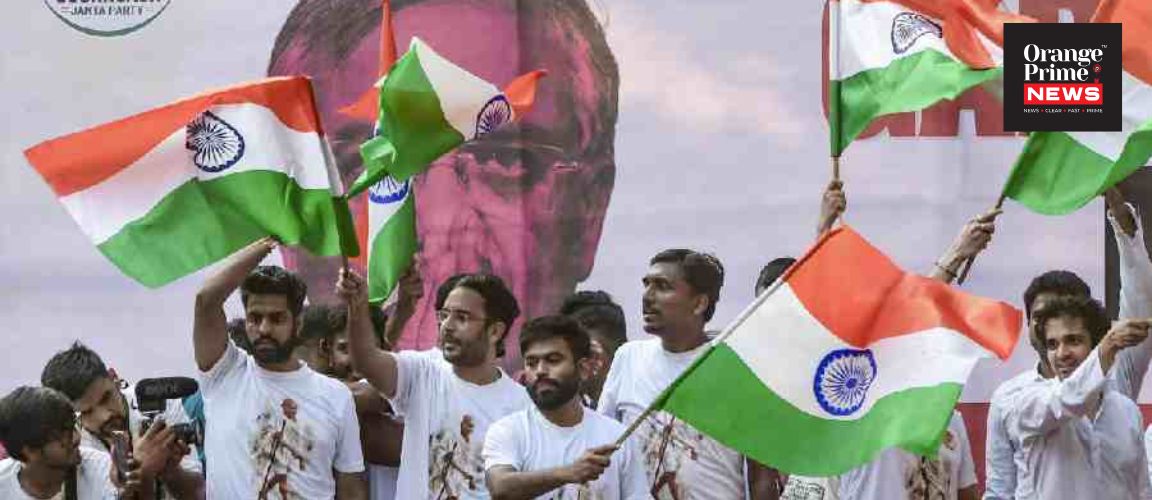
The Saturday demonstration began with protesters gathering near Patel Chowk before attempting to move towards Jantar Mantar, the designated protest venue in central Delhi.
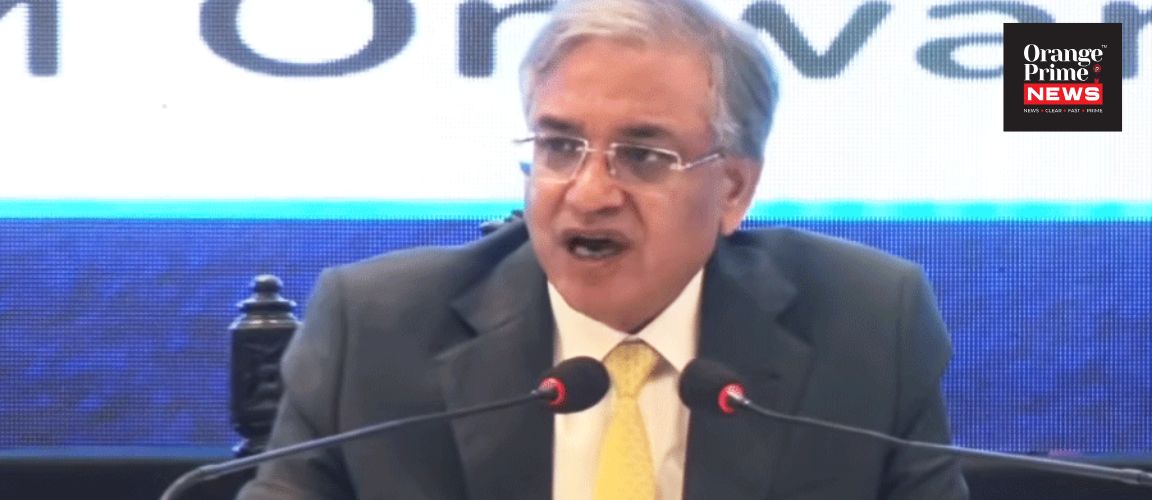
The demonstrators were demanding Kumar's resignation and raising objections to the Election Commission's handling of the SIR exercise.
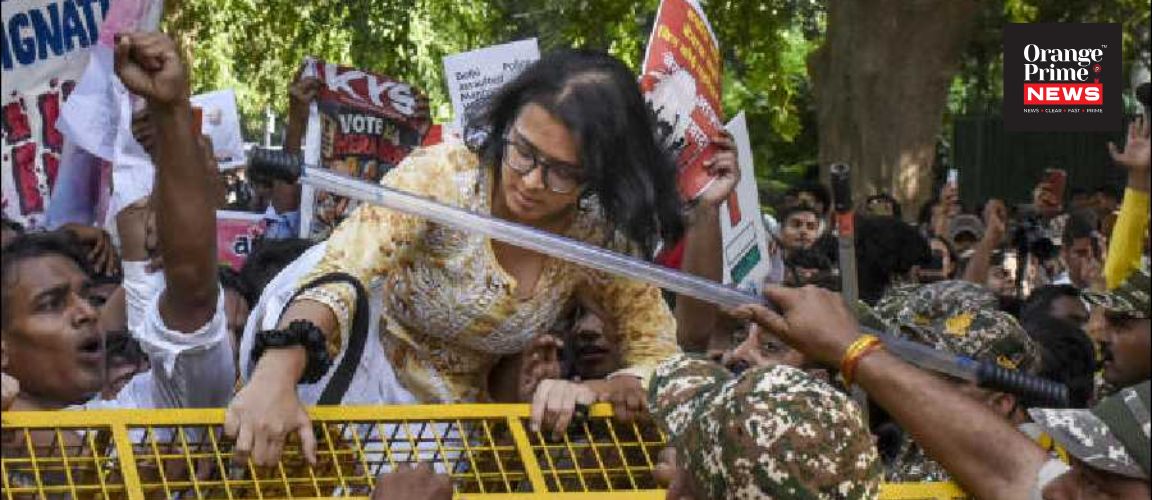
Police had deployed additional personnel and erected barricades at several points along roads leading towards Jantar Mantar. Officers stopped the march before it could reach the protest site and detained a large number of participants.
Police said the restrictions were part of security arrangements in an area where demonstrations had already taken place on Friday.
Unlike Friday, when several Metro stations around central Delhi were temporarily closed, no Metro station was shut on Saturday, according to reports.
Neha Bora detained during protest
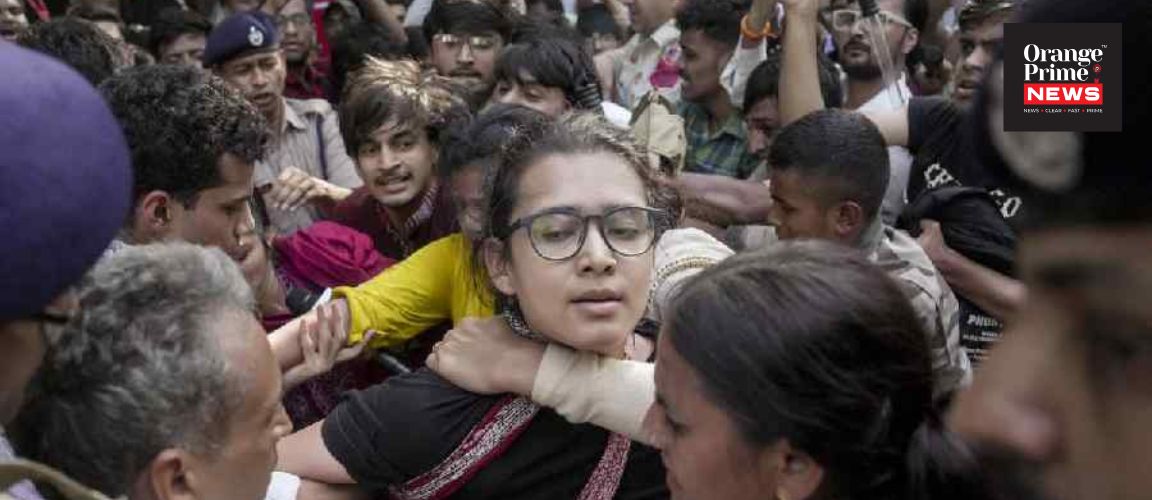
AISA president Neha Bora was among the prominent protesters detained during the day's mobilisation.
AISA members alleged that a male police officer manhandled Bora during the police action and that another officer verbally abused her. The allegations could not immediately be independently verified.
Bora was initially able to avoid detention and rejoin the march, but police detained her again as the demonstration continued.
The activist had called for another mobilisation after being detained during Friday's protest. She urged supporters to return to Jantar Mantar and continue raising concerns over the SIR process and the demand for Kumar's resignation.
The allegations concerning the conduct of individual police officers remain separate from the broader question of whether the protesters had permission to demonstrate at the venue.
Yogendra Yadav and Prashant Bhushan among those held
Activist Yogendra Yadav and senior advocate Prashant Bhushan were also detained.
Police took several protesters to different locations in Delhi. Yadav and Bhushan were taken to Badarpur police station, according to reports.
The presence of senior lawyers and civil society figures added to the profile of the demonstration.
RTI activist Anjali Bhardwaj also participated, while senior advocates Kapil Sibal, Nitya Ramakrishnan and Pallav Sisodia joined the march.
The participation of people from different sections of civil society reflected the broader nature of the campaign, which has brought together student organisations, political groups, lawyers and activists.
Kapil Sibal joins march
Congress leader and senior advocate Kapil Sibal took part in the march and later spoke to reporters about his reasons for participating.
Sibal said the concerns surrounding the electoral-roll revision were not limited to younger protesters and argued that the issue affected the wider electorate.
He also referred to the constitutional principle of one person, one vote and said that any process affecting voting rights required serious scrutiny.
Sibal's comments were made in the context of the protesters' criticism of the SIR process and their demand for action against Kumar.
His participation does not mean that all Opposition parties or political groups involved in the wider debate share identical demands or positions.
Police maintain restrictions around Jantar Mantar
The Delhi Police had denied permission for the proposed demonstration at Jantar Mantar and imposed restrictions in the New Delhi district.
The police action has become an important part of the controversy surrounding the protests.
On Friday, authorities had prevented several groups from reaching Jantar Mantar and detained hundreds of people. The police subsequently registered three FIRs against unidentified people in connection with attempts to hold the demonstration.
The FIRs were registered at Parliament Street and Connaught Place police stations under provisions of the Bharatiya Nyaya Sanhita relating to disobedience of an order issued by a public servant, obstruction of a public servant, use of criminal force against a public servant and acts allegedly committed by several people in furtherance of a common intention.
Police have maintained that the restrictions were necessary because permission had not been granted for the proposed demonstrations.
Second day follows large Friday mobilisation
Saturday's events came a day after a much larger mobilisation in Delhi.
On Friday, student organisations, political parties and civil society groups attempted to reach Jantar Mantar to protest against Kumar and the SIR exercise. Police detained hundreds of people at different locations around central Delhi.
Reports on the exact number detained on Friday varied, with figures ranging from several hundred to around 700 or more.
Among those detained were AAP leaders, RJD MP Manoj Jha, former Delhi chief minister Atishi, AISA activists and Left student leaders. Several roads were barricaded and security forces were deployed around the protest area.
The repeated mobilisation has turned the area around Jantar Mantar into the main Delhi flashpoint in the growing dispute over the SIR process.
Protesters question electoral-roll revision
The protesters' central concern is the Special Intensive Revision of electoral rolls.
Opposition parties, student organisations and civil society groups have alleged that the process could result in eligible voters being excluded from electoral rolls. They have demanded greater transparency and scrutiny of the Election Commission's decisions.
The Election Commission has defended the SIR process and maintained that the revision is intended to verify electoral rolls and ensure that eligible citizens remain included while ineligible entries are removed.
The disagreement over the process has become increasingly political following reports of internal objections within the Election Commission.
Reported differences within Election Commission
The protests have also followed reports that Election Commissioners Sukhbir Singh Sandhu and Vivek Joshi raised objections on at least 14 occasions over a period of around 10 months concerning decisions and orders linked to electoral-roll management and the SIR.
Opposition groups have cited those reports as evidence that the Commission's internal decision-making requires greater scrutiny.
The Election Commission has rejected the suggestion that the reported differences represent a breakdown within the institution. It has said that differing views and observations are a normal part of deliberations and that its final decisions were taken through the established legal and statutory process.
The reported objections have therefore become part of a wider political dispute, rather than a judicial finding that the Commission acted unlawfully.
Police action becomes part of the debate
The repeated detentions have added another dimension to the controversy.
Protest organisers argue that authorities should allow peaceful demonstrations concerning electoral rights and constitutional issues.
The police, meanwhile, have pointed to the absence of permission and the restrictions imposed around Jantar Mantar.
The Indian Youth Congress has separately approached the Delhi High Court challenging the rejection of permission for its proposed demonstration, arguing that authorities should regulate peaceful assemblies proportionately rather than effectively prohibit them.
The legal challenge is separate from Saturday's detentions but illustrates the broader dispute over the regulation of demonstrations in the capital.
Complaint over alleged harassment of journalist
The day's events also led to a separate protest outside Parliament Street Police Station.
Several independent journalists gathered there seeking action over an allegation that a woman journalist covering the demonstrations had been sexually harassed by a police officer.
The allegation was raised publicly by protesters and activists. It had not been independently established at the time of reporting.
The incident has added to demands for scrutiny of police conduct during the protests.
Any investigation into the allegation would have to establish the identity of the officer involved and the circumstances of the alleged incident.
Rahul Gandhi expresses solidarity
Congress leader Rahul Gandhi also expressed solidarity with the protesters.
His support came amid wider Opposition criticism of the Election Commission and its handling of the SIR exercise.
Opposition parties have increasingly linked their concerns over electoral-roll revision with broader questions about voter rights and the functioning of constitutional institutions.
The BJP and the Election Commission have rejected allegations of wrongdoing.
Protest movement continues
The Saturday mobilisation was the second consecutive day of major protests around Jantar Mantar over the demand for Kumar's resignation.
The repeated attempts to reach the protest site, despite police restrictions, have resulted in hundreds of detentions over the two days.
The campaign is also expanding beyond Delhi. Student organisations, Opposition parties and civil society groups have held demonstrations in other parts of the country, while the Cockroach Janta Party has announced another protest in Delhi for October 10 if Kumar does not resign.
The wider political campaign remains centred on the SIR exercise and allegations that electoral-roll changes could affect eligible voters.
What happens next
For now, the immediate focus remains on the legal and political dispute over the SIR process and the regulation of protests in Delhi.
The police will continue to enforce the restrictions around Jantar Mantar unless permission is granted or the orders are changed. The protesters, meanwhile, have indicated that they intend to continue mobilising.
The Delhi High Court will also consider the challenge by the Indian Youth Congress to the denial of permission for its proposed demonstration.
At the institutional level, the Election Commission continues to defend the SIR process and says its decisions were taken according to established procedures.
The Saturday detentions therefore represent another escalation in a dispute that now involves electoral-roll revision, demands for accountability from the CEC, the right to peaceful assembly and questions about police conduct.