Neha Bora detained during march
The latest demonstration began from the Andhra Bhavan area on Ashoka Road, with protesters moving towards Jantar Mantar in support of demands for action against Chief Election Commissioner Gyanesh Kumar.
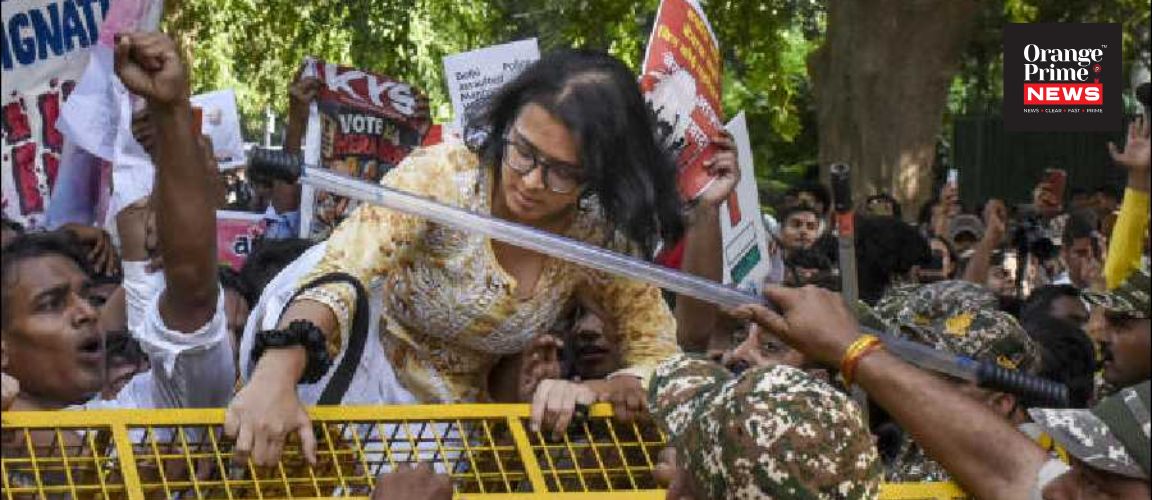
AISA president Neha Bora was among those leading the march.
When the protesters reached barricades near the Shangri-La Hotel, around a kilometre from Jantar Mantar, Bora attempted to cross the police barricading.
She was stopped by police personnel and subsequently taken away in a vehicle. Other protesters were detained and placed in buses.
According to reports from the protest site, some demonstrators climbed onto the vehicle carrying Bora and others formed a human chain in an attempt to prevent the police from removing detainees.
The protesters also managed to free some people from a bus, including one of the women journalists whose complaint against police personnel had become a major focus of Sunday's demonstration.
Bora was later released in Narela in north Delhi.
AISA alleges improper detention
The All India Students' Association criticised the manner in which Bora was detained and accused the police of taking her away in a private vehicle.
After her release, Bora criticised the repeated detention of protesters and questioned the decision to take demonstrators away from central Delhi.
Her comments were made in the context of the continuing restrictions around Jantar Mantar and the earlier detentions of protesters seeking to return to the designated protest area.
The allegations concerning the manner of her detention have not been independently established. Delhi Police has maintained that restrictions were in force in the New Delhi district and that action was taken against protesters who did not comply with police directions.
Women journalists' complaints become part of protest
The Sunday demonstration also focused on allegations made by three women journalists during the October 3 protest.
The journalists have complained that police personnel behaved inappropriately towards them while they were covering the demonstrations and detentions.
One complainant alleged that an assistant commissioner of police sexually harassed her after she questioned the absence of women police personnel during the detention of female protesters.
Another journalist alleged inappropriate physical contact while she was recording the detention of protesters.
The allegations remain under investigation and should not be treated as established findings against any police officer.
Delhi Police said the New Delhi district had received complaints from three women journalists and transferred them to the Crime Branch for a "fair and impartial enquiry".
Crime Branch to examine evidence
The Crime Branch has been tasked with examining the allegations and collecting evidence related to the incidents.
Police have said statements of the complainants would be recorded and CCTV footage from the protest area would be examined.
Authorities have also appealed to people who may have relevant video recordings to provide them to investigators.
The decision to transfer the complaints to the Crime Branch was explained by police as a measure intended to ensure an impartial inquiry because officers from the local police district were themselves involved in managing the protest.
The investigation will determine whether the allegations are supported by available evidence and whether any further legal action is warranted.
Protesters demand FIR
The complaints have also triggered demonstrations outside Parliament Street police station.
Journalists, activists and political supporters gathered outside the station seeking registration of an FIR and demanding that the allegations be investigated.
Some protesters alleged that police had not immediately registered an FIR despite the complaints.
Delhi Police, however, said the complaints had been received and transferred to the Crime Branch.
The dispute over the procedural handling of the complaints has consequently become another point of contention between protesters and the police.
The Press Council of India and journalists' organisations have also expressed concern over the allegations and called for appropriate action.
Youth Congress holds torchlight march
The protests were not limited to student organisations.
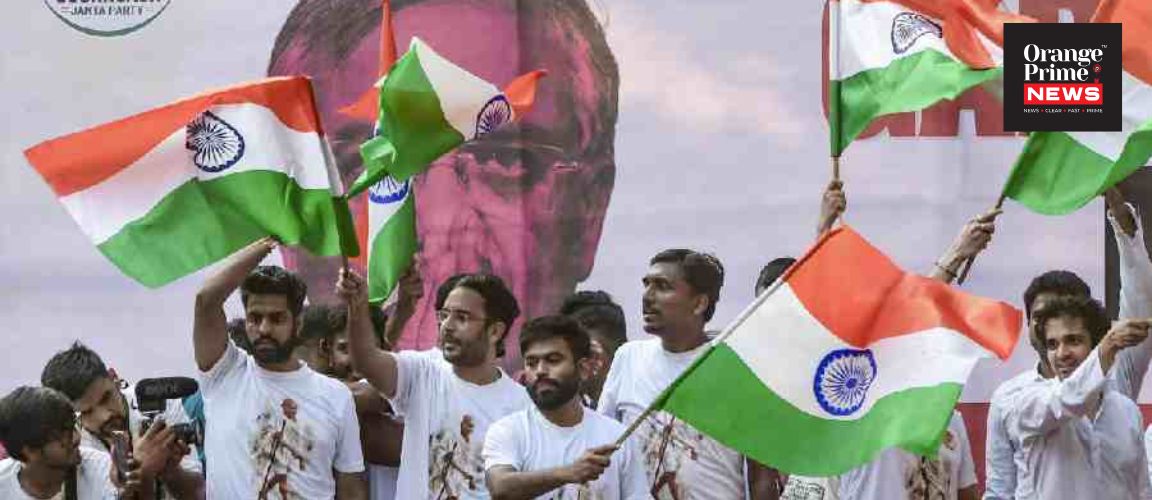
The Youth Congress organised a torchlight procession from Raisina Road towards Jantar Mantar during the evening.
Participants carried candles, posters and the national flag while raising demands related to the Election Commission and the SIR process.
The march was stopped by police before it could reach the protest site.
Youth Congress president Uday Bhanu Chib criticised the restrictions and argued that Jantar Mantar should remain accessible to protesters.
The police, meanwhile, cited the restrictions imposed in the New Delhi area while managing the demonstrations.
AAP leaders also detained
The Citizens' March organised by Left groups and other Opposition supporters also drew participation from Aam Aadmi Party leaders.
AAP Delhi chief Saurabh Bharadwaj and MLA Sanjeev Jha were among those detained while protesters attempted to move from India Gate towards Jantar Mantar.
The demonstrations were part of a broader campaign against the Election Commission's handling of electoral-roll revision and the Special Intensive Revision.
Opposition parties have demanded greater scrutiny of the SIR process and have questioned the continuation of Gyanesh Kumar as Chief Election Commissioner.
Police cite restrictions in New Delhi
Delhi Police has said prohibitory orders under Section 163 of the Bharatiya Nagarik Suraksha Sanhita were in force in the New Delhi district during the protests.
The order restricts public gatherings and demonstrations without prior written permission.
Police said protesters had been informed of the restrictions and directed to leave the area. According to the police account, action was subsequently taken when some protesters refused to comply.
Earlier demonstrations had also resulted in large-scale detentions as protesters tried to reach Jantar Mantar.
The police response has itself become a central part of the political dispute, with Opposition parties and civil society groups questioning whether the restrictions have been applied disproportionately.
Third day of demonstrations
Sunday's events marked the third consecutive day of protests linked to the demands against Kumar and the SIR process.
The demonstrations have involved student organisations, political parties, activists and journalists.
Security arrangements around Jantar Mantar and neighbouring roads remained extensive, with barricades used to prevent protesters from reaching the designated area from different directions.
The continuing protests have also led to repeated confrontations between demonstrators and police.
Opposition parties plan joint protest
The mobilisation is expected to continue in the coming days.
Delhi units of several INDIA bloc parties have decided to organise a joint demonstration outside the Delhi election commission office on Wednesday.
Representatives of the Congress, CPI, CPI(M), Rashtriya Janata Dal, Nationalist Congress Party (SP) and Revolutionary Socialist Party participated in discussions on the proposed protest, according to the Delhi Congress.
The parties are expected to raise their objections to the SIR process and reiterate their demand for action against Gyanesh Kumar.
SIR remains at the centre of dispute
The protests are part of a larger political controversy over the Special Intensive Revision of electoral rolls.
Opposition parties and several civil society groups have raised concerns about the potential effect of voter-roll changes on eligible voters.
The Election Commission has defended the SIR exercise and maintained that electoral-roll revision is intended to ensure that eligible voters remain on the rolls while removing duplicate, deceased, shifted or otherwise ineligible entries.
The Commission has also rejected suggestions that disagreements reported among its members indicate institutional breakdown, maintaining that final decisions were taken through the established process.
The competing positions have made SIR one of the major political issues surrounding the Election Commission.
What happens next
The immediate focus will remain on the Crime Branch investigation into the complaints filed by the three women journalists and on the continuing protests against the Election Commission.
The investigation is expected to examine statements, CCTV footage and other available evidence before determining whether further action is required.
At the same time, Opposition parties and student organisations have signalled that demonstrations will continue.
For now, Bora and other protesters have been released after detention, while the authorities continue to enforce restrictions around the central Delhi protest zone.
The combination of continued demonstrations, police restrictions and the investigation into allegations against police personnel means the dispute is likely to remain active in the capital in the coming days.