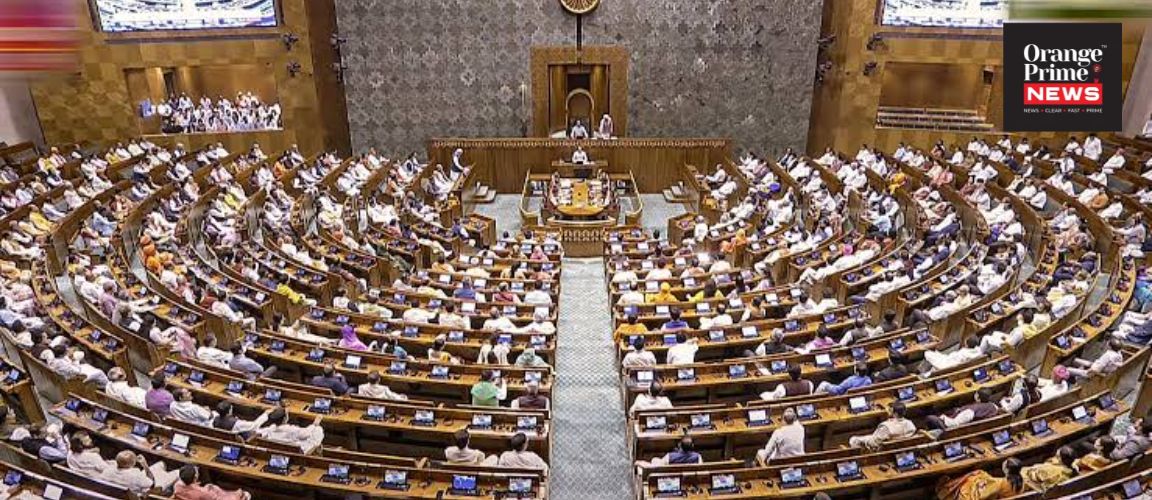
Government claims support beyond required majority
Government managers on Thursday claimed that the Centre had secured more than the two-thirds majority needed to pass the proposed constitutional amendment bill on women's reservation through delimitation.
A senior government source indicated that a special session of Parliament would be convened soon to consider the legislation.
"Yes, a special session of Parliament would certainly be convened. We have 17-18 votes more than the required strength to pass the bill," the source said.
However, the government did not disclose the details of its claimed support or provide a specific date and duration for the proposed session.
The constitutional amendment requires the support of at least two-thirds of members present and voting in each House of Parliament. The government's claim therefore suggests that it believes it has gathered sufficient backing to move the legislation forward after an earlier setback.
Proposed expansion of Lok Sabha to 850 seats
The proposed legislation seeks to increase the strength of the Lok Sabha from its present 543 seats to a maximum of 850 through a delimitation exercise.
The expansion is intended to create the framework for implementing 33 per cent reservation for women in legislatures.
The government has linked the implementation of women's reservation with the proposed delimitation process, which would redraw electoral constituencies and alter the composition of the Lok Sabha.
The legislation is politically significant because it combines two contentious issues: increasing women's representation in elected bodies and restructuring parliamentary constituencies.
Earlier defeat in April remains a major setback
The latest political developments follow the government's defeat in the Lok Sabha in April, when the Opposition united to block the constitutional amendment bill.
The setback forced the BJP and its allies to reassess their parliamentary strength and seek additional support before attempting to introduce the legislation again.
Since then, government managers have reportedly been working behind the scenes to secure the numbers necessary for passage.
The government has repeatedly indicated that a special session would be called once the required majority was within reach. Thursday's claim represents its strongest indication so far that it believes the numbers are now available.
However, officials have not explained how the additional support was secured or whether any Opposition members have agreed to back the proposal.
Special session timing remains uncertain
Despite the government's assertion, there is no confirmed date for the proposed special session.
The monsoon session of Parliament was adjourned sine die on August 13 but has not yet been prorogued. This has kept open the possibility of reconvening the existing session at relatively short notice.
An extension or continuation of the existing session requires a minimum notice of two days, while a completely new session requires at least 14 days' notice, according to the report.
The government has not clarified whether it intends to reconvene the existing session or call a fresh one.
The timing has also attracted attention because Parliament's winter session is generally convened in the second half of November. The possibility of a special sitting before the regular winter session has therefore fuelled political speculation.
Congress challenges Centre's claim
Congress communication chief Jairam Ramesh responded sharply to reports that the government was preparing to convene a special session to pass the legislation.
He criticised Union Home Minister Amit Shah, alleging that the government had made similar claims earlier but failed to secure the necessary support in April.
In a post on X, Ramesh referred to the proposed delimitation exercise as the "delimitation plantation" and accused the government of attempting to create an impression that the legislation would pass without difficulty.
He also recalled the April 17 defeat, claiming that the government had fallen short by more than 50 votes.
"The home minister has revived the 'delimitation plantation' today while talking informally to a group of journalists. He told them this afternoon that a 3-day special session will soon be called and the Bills will be passed," Ramesh wrote.
He further said the Opposition would defeat the bill again, arguing that the government's earlier attempt had failed despite similar expectations.
Political contest over women's reservation and delimitation
The proposed legislation is likely to trigger another round of political confrontation between the government and Opposition parties.
While the Centre is presenting its claimed two-thirds support as a sign that the bill could move forward, the Opposition has questioned the government's strategy and raised objections to the proposed legislative approach.
The central issue is not only the implementation of 33 per cent reservation for women but also the proposed expansion and delimitation of parliamentary constituencies.
For now, the government has not announced a formal parliamentary schedule or provided publicly verifiable details of the additional support it claims to have secured.
The next steps will depend on whether the Centre formally convenes Parliament and can demonstrate the required majority when the constitutional amendment is put to a vote.