The sharp rise in sugar prices has triggered a political confrontation, with the Congress blaming the Narendra Modi government’s policy decisions for worsening supply pressures and accusing the Centre of responding too slowly to signs of a domestic shortage.
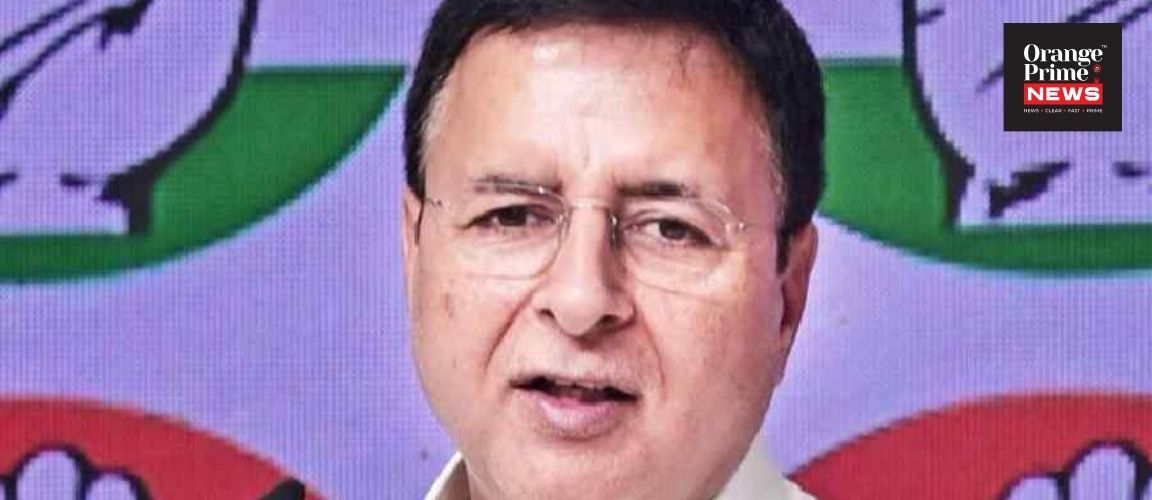
Congress general secretary and Rajya Sabha MP Randeep Surjewala said on Thursday that a combination of reduced sugarcane cultivation, weaker production and inadequate opening stocks had contributed to the current situation.
He also linked the shortage to the government’s ethanol blending policy, arguing that sugar available in the domestic market had effectively been diverted towards the production of ethanol required for the E20 programme.
The Congress’s criticism comes as retail sugar prices have climbed significantly in recent weeks.
According to government data cited by Surjewala, the price of sugar increased from ₹48.18 per kilogram on July 20 to ₹64.33 per kilogram on August 27.
The government has attributed the increase to several factors, including lower-than-expected domestic production, damage to crops, tighter international supplies, stronger demand ahead of the festive season and speculation or hoarding by sections of the sugar industry.
The Congress, however, has argued that policy decisions taken by the Centre have played a major role in creating the supply imbalance.
Congress points to shrinking opening stocks
Surjewala said one of the clearest indicators of the emerging shortage was the sharp reduction in the quantity of sugar available at the beginning of the 2025-26 season.
According to figures cited by him, the opening stock stood at around 50 lakh tonnes for 2025-26, compared with approximately 80 lakh tonnes at the beginning of the previous season.
That represents a decline of around 30 lakh tonnes before accounting for production during the new sugar year.
Surjewala argued that the lower opening inventory left the market with considerably less of a buffer to absorb fluctuations in production and consumption.
The Congress leader also questioned estimates of domestic sugar production.
He referred to an April 30 statement by the Indian Sugar Mills Association, which had put sugar production for 2025-26 at approximately 275 lakh metric tonnes.
According to Surjewala, this was substantially below the 343 lakh metric tonnes that the government had previously projected.
The difference between projected and actual production, he argued, further tightened supplies at a time when domestic consumption remained high.
The Congress has therefore sought to portray the current price increase as the result of a supply problem that could have been anticipated earlier.
E20 policy becomes a political flashpoint
A major element of the Congress’s criticism is directed at the government's ethanol blending programme.
The E20 policy aims to increase the proportion of ethanol blended into petrol, creating additional demand for ethanol feedstock, including sugarcane and sugar-related products.
Surjewala argued that the policy had placed additional pressure on sugar availability.
His contention is that stocks that could otherwise have remained available for consumption were being channelled into ethanol production.
The Congress has questioned whether the government adequately considered the effect of the ethanol programme on food availability and sugar prices.
Surjewala argued that fuel policy should not result in a situation where consumers face significantly higher prices for an essential food commodity.
The government, however, has continued to promote ethanol blending as part of its broader energy strategy.
The policy is intended to reduce dependence on imported fossil fuels, lower crude oil requirements and create an additional market for agricultural products.
The political disagreement therefore extends beyond the immediate issue of sugar prices to the broader question of how India should balance food consumption, farmer interests, energy security and ethanol production.
Why the timing of imports has become controversial
The Congress has also questioned the timing of the Centre’s decision to import sugar.
The government announced on August 20 that 10 lakh tonnes of raw sugar would be imported.
Surjewala argued that the decision came too late to provide meaningful relief during the most important part of India’s festive season.
According to his calculation, sugar transported from Brazil by sea could require between 45 and 55 days to reach India.
Imported raw sugar would then require another 10 to 15 days for processing before it could enter the domestic market.
That timeline, he argued, means the imported sugar may become available only after much of the peak festive demand has passed.
India typically sees higher sugar consumption during the months associated with major festivals, with demand rising substantially during August, September, October and November.
Surjewala said monthly domestic consumption is normally around 24 lakh tonnes but can rise to roughly 30 lakh tonnes during the festive period.
Against that backdrop, the Congress has argued that imports approved in late August may not be sufficient to immediately ease prices.
Government cites multiple causes for price increase
The Centre has not attributed the price increase solely to domestic production.
Its explanation includes several overlapping factors affecting the sugar market.
Lower-than-expected domestic output has reduced available supplies, while crop damage has added to the pressure.
At the same time, global sugar availability has tightened.
Domestic demand has also increased ahead of the festive season, creating additional pressure on prices.
The government has additionally pointed to speculation and hoarding by sections of the industry as factors contributing to the sharp movement in retail prices.
The competing explanations reflect the political divide over the issue.
While the Congress has focused heavily on government policy and the E20 programme, the Centre has cited a combination of production, weather, international market and market-behaviour factors.
Congress calculates impact on consumers
Surjewala estimated that the higher prices could impose a substantial additional burden on consumers if elevated rates persist through the festive period.
Using an assumed price difference of around ₹30 per kilogram, he calculated that consumers could collectively spend tens of thousands of crores more on sugar.
He estimated the additional burden at around ₹36,000 crore if prices remain elevated through October.
The figure is based on assumptions about consumption and the difference between the normal and elevated retail prices, rather than an independently established government estimate.
Surjewala used the calculation to argue that a large amount of additional money could flow from consumers to traders and other market participants benefiting from higher prices.
He also raised political questions about whether some of the financial gains could eventually find their way into political contributions.
Those allegations were presented by the Congress leader as part of his wider criticism of the government's handling of the sugar market.
Attack on BJP's defence of ethanol policy
Surjewala also criticised BJP leaders who have defended the government's ethanol policy.
He referred to comments by BJP leader Kailash Vijayvargiya and Bihar minister Shravan Kumar, accusing them of presenting the rise in sugar prices as a positive consequence of the government's policies.
The Congress leader used sarcasm to attack the argument that ethanol blending could help address health concerns while simultaneously contributing to higher sugar prices.
His criticism was aimed at the government's broader public messaging around E20 and the benefits of reducing petrol consumption through ethanol blending.
The Congress has argued that any reduction in the import bill for crude oil must be weighed against the cost of importing sugar when domestic availability falls.
Surjewala said that if ethanol policy creates a shortage that forces India to import sugar at higher international and transportation costs, some of the economic benefits claimed for the programme could be offset.
Debate over India's position as sugar producer
India has historically been one of the world's major sugar-producing countries.
Surjewala therefore questioned how the country could move towards importing sugar at a time when it remains a major producer.
The Congress leader argued that the policy environment should ensure adequate sugar availability for domestic consumers before additional supplies are committed to fuel production.
His comments highlight the tension between India's food and energy priorities.
The government has promoted ethanol as a way of creating an additional market for farmers and reducing the country's dependence on imported crude oil.
For sugar mills and cane growers, ethanol production can provide an alternative source of revenue and reduce dependence on sugar prices alone.
However, the current rise in sugar prices has given the Opposition an opportunity to question whether the balance between these objectives has been properly maintained.
Congress recalls subsidised sugar through ration shops
Surjewala also compared the current situation with an earlier central government scheme under which subsidised sugar was distributed through the public distribution system.
He said the Congress-led government had provided 500 grams of sugar per person through ration shops at a subsidised price of ₹13.50 per kilogram to around 40 crore people.
According to him, the central government bore the remaining subsidy of ₹18.50 per kilogram.
Surjewala said the scheme was discontinued in 2017 by the Modi government.
The comparison was intended to highlight the Congress's argument that the Centre should intervene more directly when the prices of essential commodities rise sharply.
The current government has instead pointed to market supply, production levels and industry behaviour while taking measures such as imports to increase availability.
Festive season adds urgency
The timing of the price rise has made the issue particularly sensitive.
India's festive calendar typically produces higher demand for sugar because of increased household consumption and the preparation of sweets and other traditional foods.
With demand expected to remain elevated through the coming months, consumers could continue to face higher retail prices unless domestic supplies improve or imported sugar reaches the market quickly.
The Congress has argued that the government should have acted earlier because production and stock data had already indicated a potential shortage.
The Centre's decision to import 10 lakh tonnes of raw sugar is expected to provide additional supply, but the impact will depend partly on shipping and processing timelines.
Bigger debate over food versus fuel
The sugar controversy has also opened a wider political debate about the government's ethanol strategy.
Supporters of the E20 programme argue that higher ethanol blending can reduce crude oil imports, support agricultural incomes and improve energy security.
Critics, including the Congress, contend that the policy must be carefully calibrated when sugar supplies are under pressure.
The dispute is therefore not simply about the price of sugar.
It also concerns how agricultural resources should be allocated between food consumption and fuel production.
The Congress has sought to use the latest price increase to argue that the government prioritised its ethanol targets without adequately accounting for the consequences for consumers.
The government, on the other hand, has cited multiple reasons for the price rise and has taken steps to increase imports.
What happens next
The immediate focus will be on domestic sugar availability during the festive period and the speed at which imported supplies reach Indian markets.
If prices remain high despite the additional imports, pressure on the Centre to take further measures could increase.
The government may also face renewed questions about the balance between ethanol blending targets and domestic sugar availability.
For consumers, the key concern remains whether retail prices will moderate before the peak festive demand period.
The Congress is likely to continue using the issue to attack the government's economic and agricultural policies, while the Centre is expected to emphasise production shortfalls, crop damage, global supply conditions and alleged market manipulation.
The debate over sugar prices has consequently evolved into a broader political argument over inflation, food security and India's energy transition.
For now, the allegations made by Surjewala remain the Congress's political assessment of the situation. The government's explanation attributes the price surge to a combination of supply and market factors, while the eventual effect of the Brazil imports will depend on when the consignments arrive and are processed.